Assam is often described through the lens of Assamese language, literature, Shakta-Vaishnavite traditions, and Indo-Aryan cultural influences. However, beneath this widely recognized identity lies a deeper and more complex history shaped by numerous ethnic and cultural streams.
Among these, the Tai-Kadai peoples occupy a significant place who ruled Assam for centuries. In this article we explore the Tai-origin behind several cultural elements of Assam, that are just called as Assamese today.
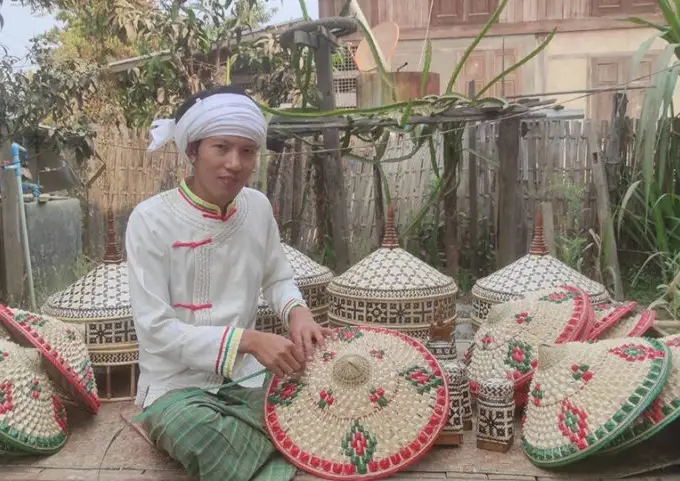
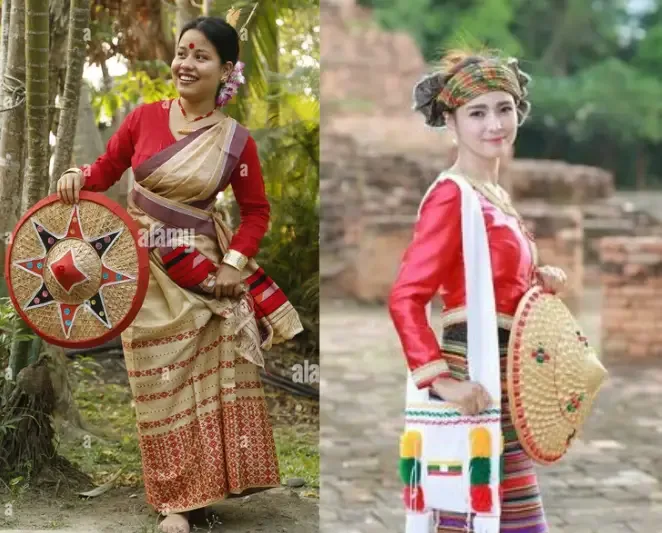
The Rice Hat : Origins of Jaapi
The Tai peoples who entered Assam, came from regions where conical bamboo and palm-leaf hats were already common throughout Southeast Asia and southern China. The first origin of such rice-hats are attributed to the Bai Yue people of Southern China and Vietnam from whom the Dai people are today descended.
Thus by principle of direct ancestry the Jaapi (called as kúpin Tai) is Dai Ahom in origin. Later many other communities including the Indo-Aryan communities started donning such hats but it is worth noting that wet-rice cultivation was only brought in the region by Tai people hence such rice hats couldn't have existed before Ahoms and also because their origin itself is in South-East Asia, from where the Tai people came.
The local Tibetic tribes with origin in the cold desert of Tibet had no such connection to ricehats.
Japi (Kúp) was originally brought by the Tai-Kadai people who also brought wet-rice cultivation
Another important for Jaapi being Tai-Kadai origin is advanced bamboo craftsmanship needed to make such rice-hats along with cultural symbolism of such rice-hats primarily associated with Tai identity. We can find many Old Anthropology pictures from British-Era showing Tai people proudly donning such hats, but we find absolutely no old pictures of Assamese people wearing such hats.
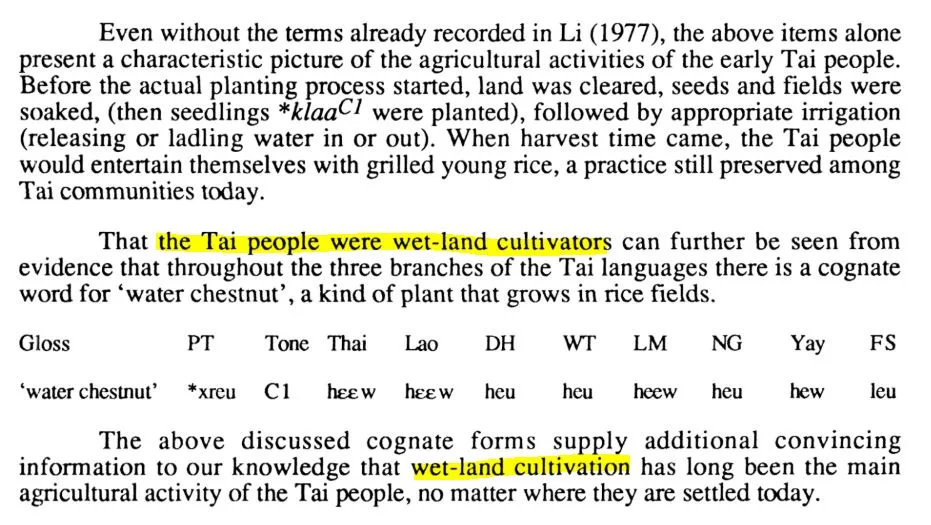
Lastly such hats are primarily associated with rice-civilizations, and we know that wet-rice cultivation was brought in the region by the Ahoms. In Tripura the King Ratna Manikya I (RatnaFa) had to invite the Muslims from East Bengal to teach them wet-rice cultivation in 15th century. Moreover, on wet-rice cultivation being an integral part of Tai identity we have evidence from Tai-Kadai languages itself which although scattered and isolated from each other for thousands of years, still have near same word for water chestnut (proto-tai *xreu) which grows only in wet-land cultivations. Hence we have very strong evidence to say that rice hat Japi (Kúp) was brought by Ahom people, which is used by Assamese identity today.
Evidence of Tai-Kadai people being Wet-Rice Cultivators since inception (Yongxian 1977)
Origin of Asomiya Gohona
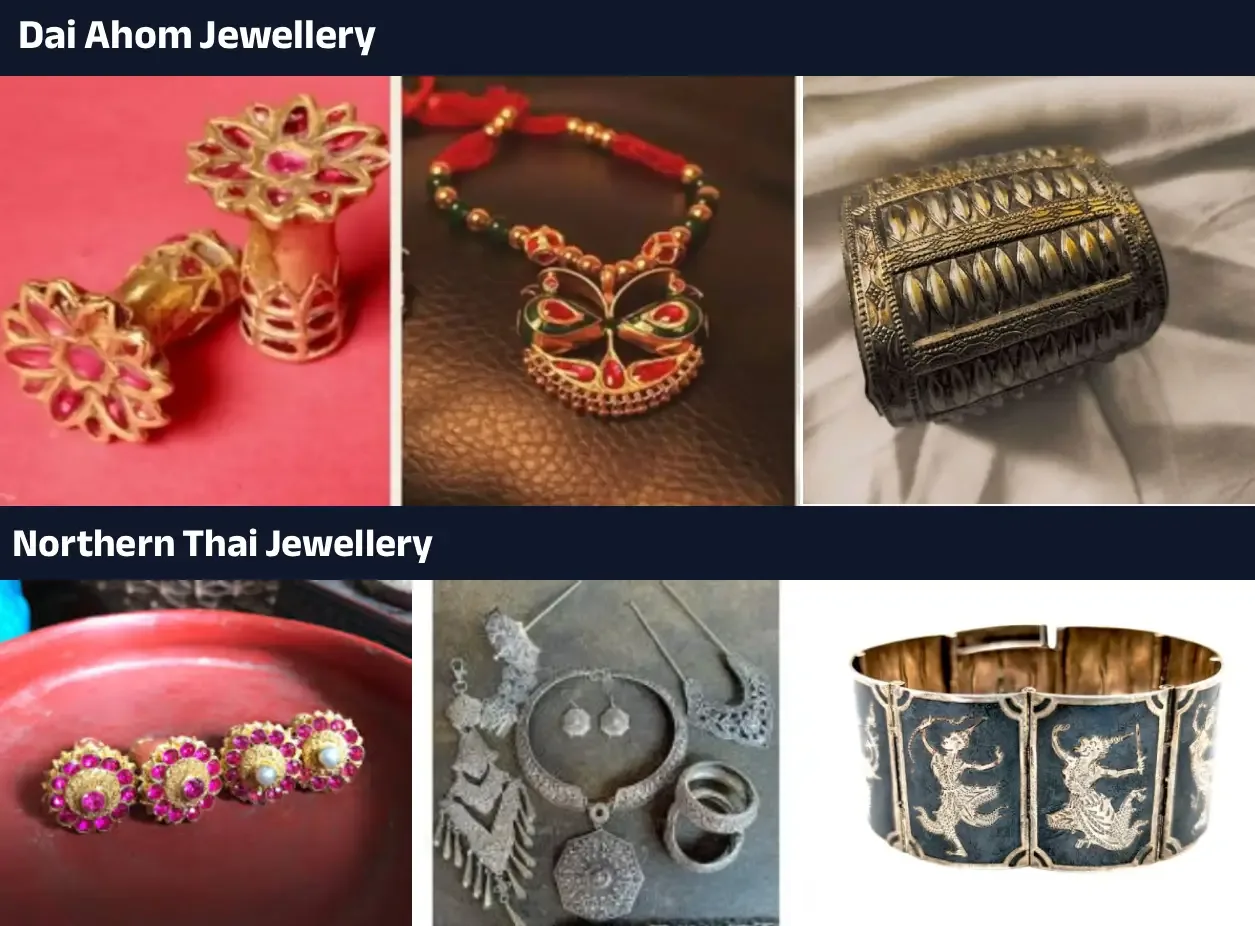
This is perhaps the most serious issue, because recently they gave GI Tag to so-called “Asomiya Gohona” even though they themselves accepted that the roots of this jewellery is in Ahom Kingdom so why was the Assamese label used forcefully instead of Dai Ahom Jewellery? The Bodos, Deoris, Tiwas every tribe of Assam has GI Tag in their own name. But in case of Ahom everything is somehow appropriated as "Assamese" even though exact same kind of Jewellery can be found in Lanna of Northern Thailand and some Dai ethnicities of Southern China.
Similarities between Dai Ahom Jewellery and Lanna Jewellery of Northern Thailand
Origin of Gamusa (Pha Mai)
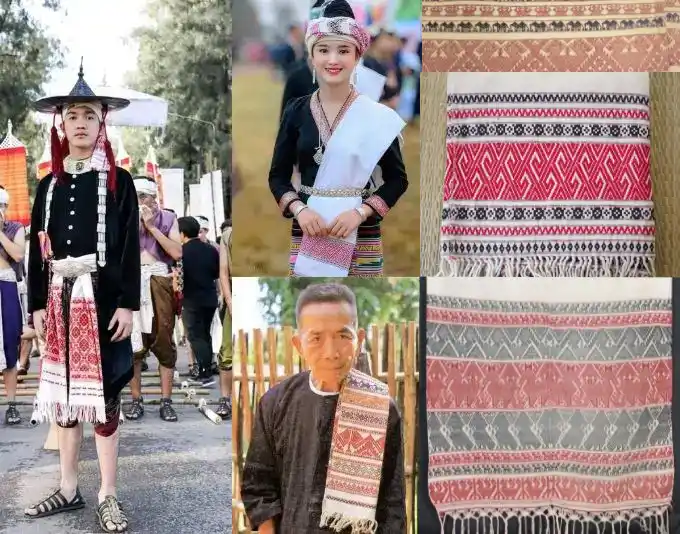
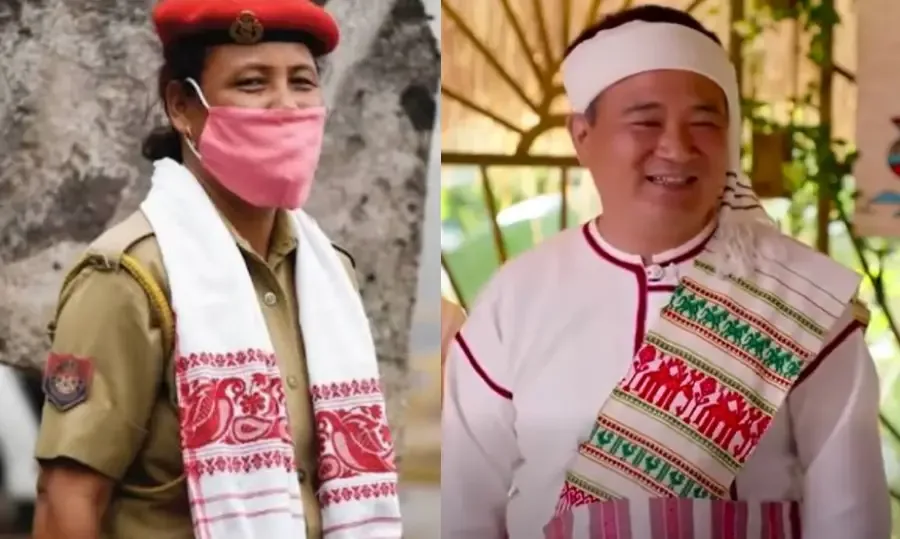
Today the most instantly recognizable cultural export from Assam is the gamusa, which is adorned by all Hindu Nationalist politicians along with other famous celebrities. But very few know that this textile originates from the Dai Ahom people. And even today in Xishuangbanna, the Dai Lue people wear similar Pha Lop (called as Phā Mai in Ahom) and the similarities are more than just co-incidence.
Dai Lue Scarf, Xishuangbanna, Yunnan
As for the primary motif used in Gamusa, it is the kingkhap motif originating in the Ahom Kingdom, so there is very little counter-evidence to say that gamusa itself didn't originate from Dai Ahom people.
Similarity between Gamusa of Assam and Pha Lop of Xishuangbanna
Especially since we consider the other different Man-Tai tribes of Assam who have their own design and for whom it is also carries cultural symbolism.
Similarities between Pha Mai of Khamyang and Pha Kao Ma of Isaan and Krama of Khmer
The Khamyang people wear a scarf which is similar to the pha khao ma ผ้าขาวม้า or krama ក្រមា worn by the Isaan (Northeastern Thai) and Khmer people. It is thus very possible that the signature Gamusa worn by the Assamese people might also be brought by the Tai people.
Origin of Guru Asana (Simhasana)
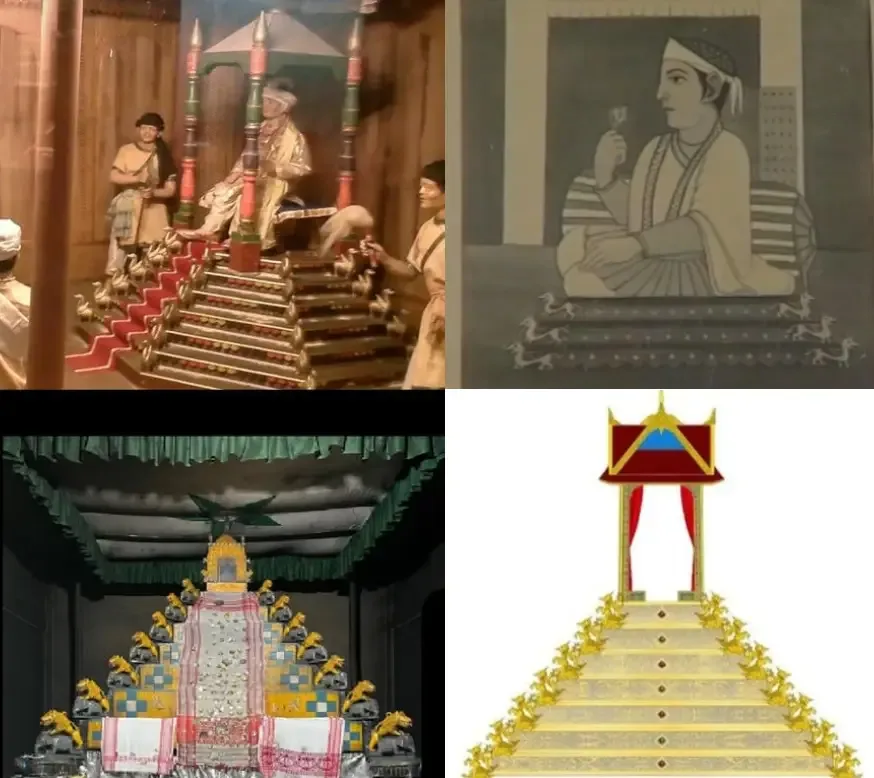
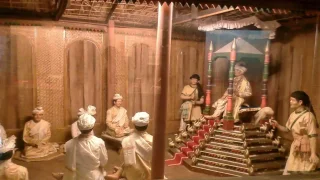
The so-called Guru Asana or Simhasana found in Assamese Namghars show a striking resemblance to the royal throne of the Ahom kingdom. The elevated wooden structure, its hierarchical arrangement, ornamental detailing, and the symbolic use of multiple steps, often seven in number, bear similarities to the ceremonial throne architecture associated with Ahom royalty. Infact the entire design has been adapted into Vaishnavite traditions without any attribution to its original source.
This architectural continuity but with an extra Vaishnavite angle raises important questions about how much of Assam’s religious and cultural landscape was shaped by the political aesthetics of the non-Aryan people called as mlecchas.by the Hindu Gurus who found themselves using the visual language of the same mlecchas whom they so detested.
Similarities of Assamese Guru-Asana (Simhasana) with Royal Ahom Throne
Origin of Kati Bihu
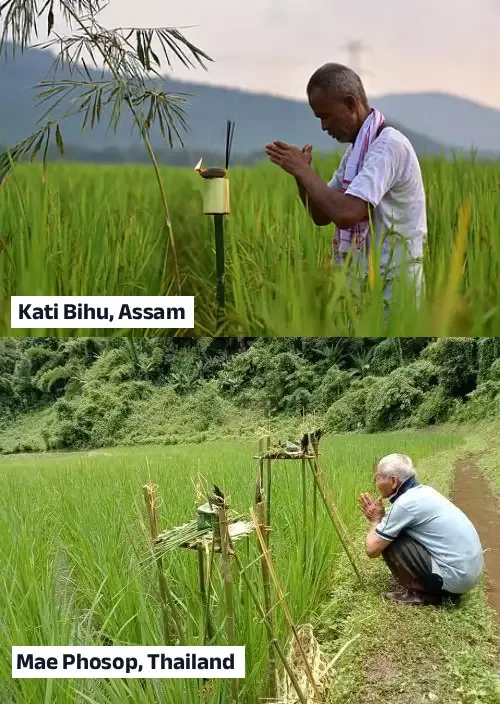
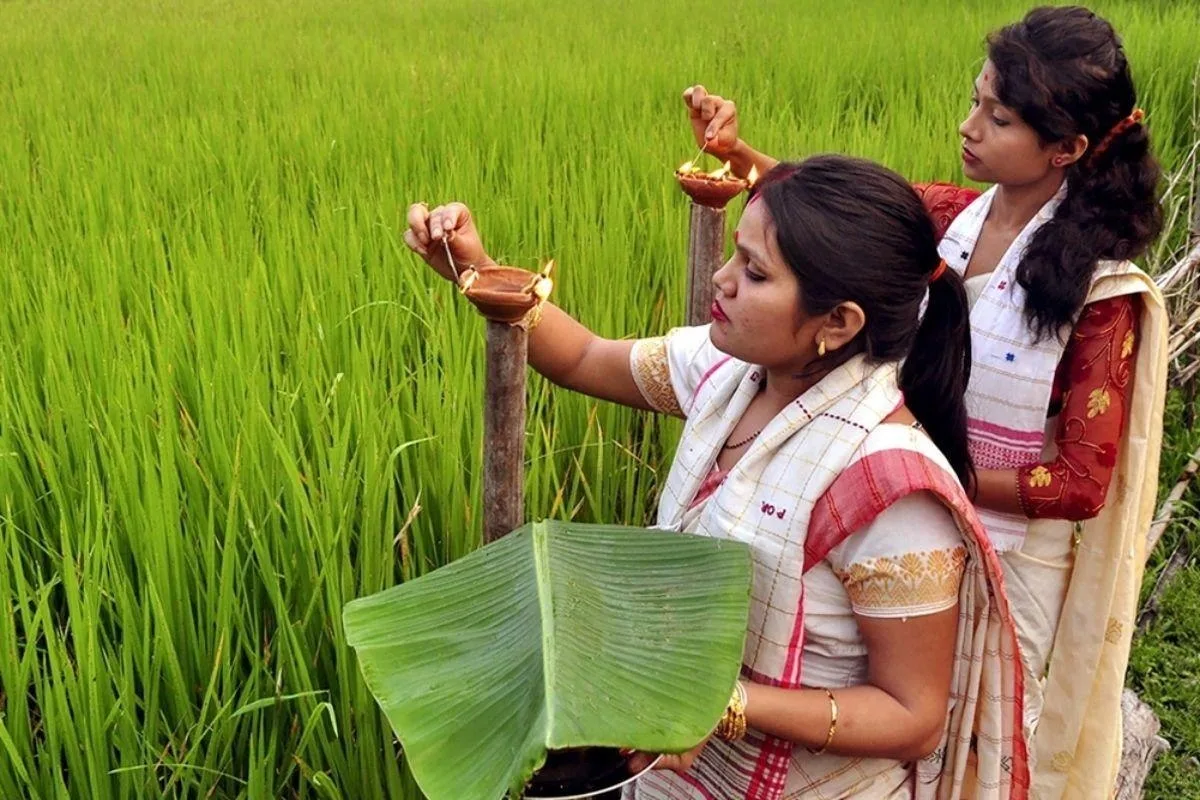
We know that Bihu is just an Assamese corruption of the Deori word bisu, but very few people know that the current Kati Bihu tradition comes from the Dai Ahom people not the Deori people. This is proved by the the sky-lights, bamboo-lights, etc which are used during Kati Bihu along with the Older Tai-Kadai traditions where they worship their rice goddess (Phosop โพสพ) in same way.
The deity of worship my have changed but the method of worship remains the same
The Dai Lue people also have folklore of their own rice goddess Ya Huan Hao who challenged even Buddha for superiority and since then Dai people have been worshipping her for better crops. The word Yā Xawn Xāo literally translates to the Grandmother of Rice Spirits
As the Tai people traditionally worshipped rice-spirits for better harvest. A tradition that is the behind the origin of Kati Bihu of Upper Assam (please note that historically lower Assam people never celebrated Kati Bihu as it originated in Ahom Kingdom)
The Kati Bihu of Assamese people have its origins in the Tai-Kadai Rice-Spirit worshipping tradition
Origin of Sky-Lights
In Kati-Bihu often the sky-lights called Akax Bonti (আকাশ বন্তি) are used but such bamboo lights can be found throughout the Tai-Kadai world.
The Sky Lights as shown in the film Joymoti (2008) and used during Kati Bihu
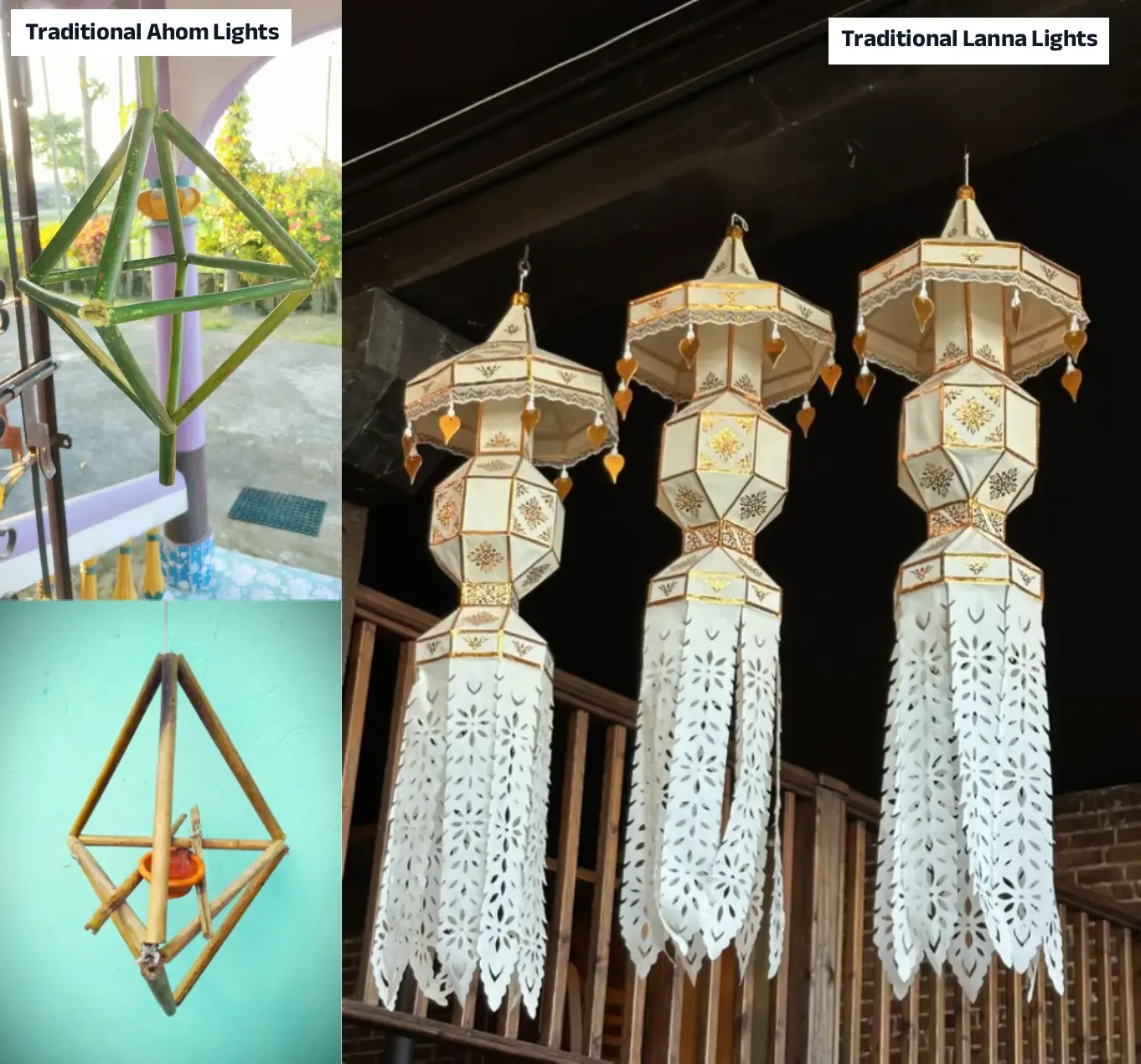
Another kind of lights are used which are stuck to trees and share strong similarity with the Lanna and Dai Lue Lamps of Northern Thailand and Xishuangbanna.
Bamboo Lamps placed on Trees in Assam and Xishuangbanna
It is said that such lights guide the ancestral spirits and this concept is also the origin of traditional Skylanterns (called púng fáior kom loi โคมลอย). The Man Tai people of Upper Assam still make such skylanterns from traditional paper, although the tradition became extinct in Ahoms cause of Aryanisation.
Similarities between traditional Ahom Lamps and Lanna Lamps
Origin of Gayan-Bayan
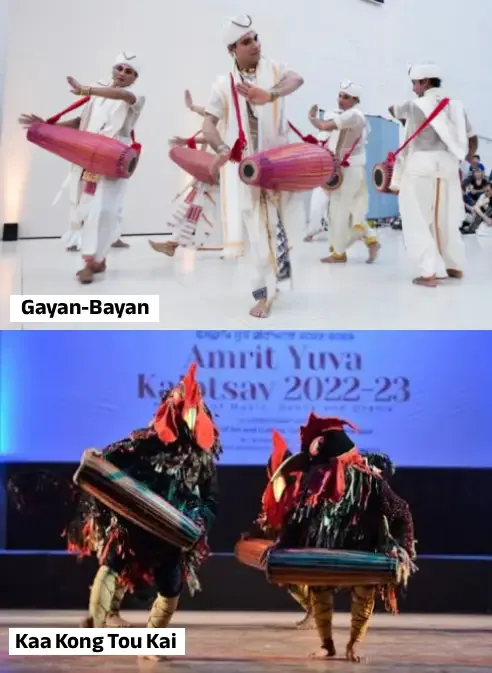
One of the greatest intellectuals of Assam, Bishnu Prasad Rabha, had famously argued that most of Assamese culture including Sattriya Dances are actually tribal in origin and Sankardev took inspiration from tribal art-forms for his own work. The bhauna for instance was inspired from Ahom Court dramas, and such dramas were already famous in South-East Asia. And similarly the gayan-bayan dance-form was also inspired from Tai dance forms, as we see strong similarity of it with Tai Khamti cock-fight dance.
Similarities between Assamese Gayan-Bayan dance and Cock Fight Dance of Tai-Kadai People
Origin of Satidhora
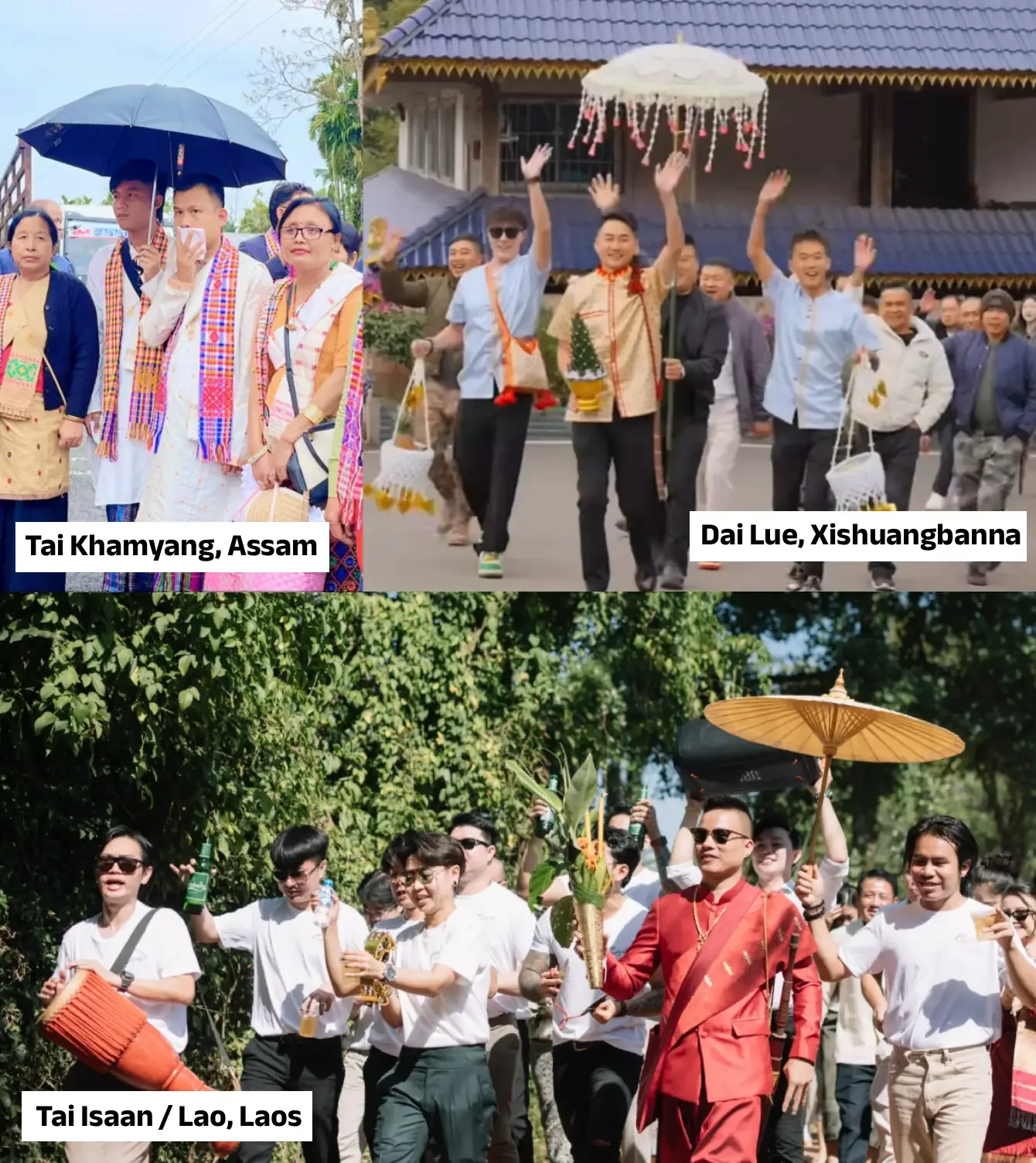
In Assamese marriage rituals there is a concept of Satidhora(or the umbrella-holder) who holds the umbrella for his groom friend and this tradition too originates from the Tai people of Upper Assam.
Using Parasol during wedding procession originates from Tai-Kadai traditions where it was associated with auspiciousness and higher social status
Since Tai people came from regions with higher humidity they needed Umbrella (thí) to protect from the sun which soon became a symbol of royalty and higher social status and thus becoming a part of wedding procession where the bridegroom appears to be prince who has come to take his Lady for wedding.
Aside from Umbrella or Parasol, the tradition of Juron where Bridegroom's family come to the Girl's family with lot of gifts and money to show that they are financially capable of taking care of the girl, and bringing offering in a traditional metal-tray (xorai) all these rituals are also Dai in origin !
Origin of Chang Ghar
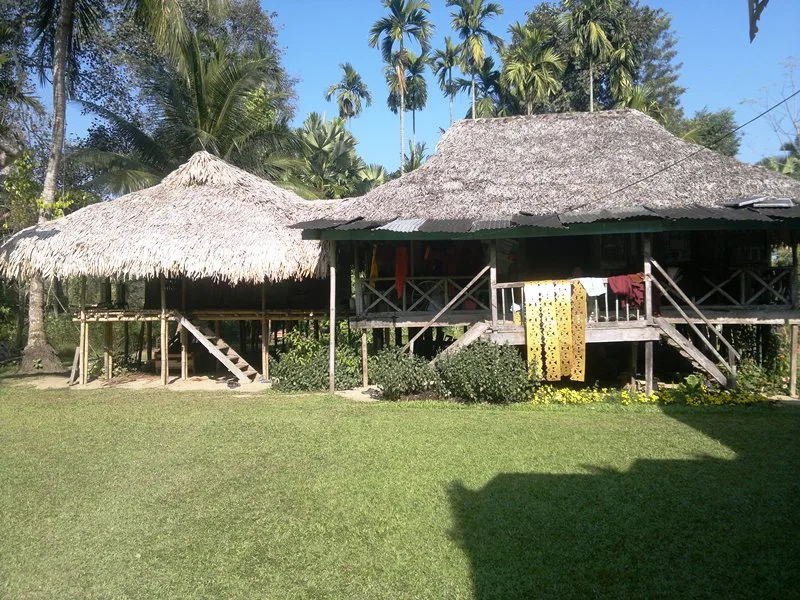
As already mentioned in our article on stilt-houses, many people wrongly attribute chang-ghar or traditional stilt-houses in Assam to the Mising community. The truth is the word 'chang ghar' itself is a calque of the Tai-word rérn-chân. The word rérn means a house and chân meaning floor or storey or literally a house with floor or storey (i.e. a multi-storeyed house)
Traditional Tai Phake House. Faneng Village, Assam
Moreover, the Mising tribe has origins in the hills of Arunachal Pradesh not in the plain flood valleys of Assam, where they currently reside. And while other Tani groups do not construct such stilt houses, we can find such stilt-houses in almost every major Tai group, including the several Man Tai tribes of Assam like Khamyang, Phake, Aiton, Khamti, etc.
In addition to this, we also have historical evidence from Mir Jumla's campaign where they talked about such stilt-houses and other type of wood-craftsmanship unlike any other they had seen anywhere. So this is another instance where despite having clear historical and linguistic evidence, the Assam Academia still calls chang-ghar as an indigenous invention of the Mising community, instead of acknowledging its Tai-Kadai roots.
Origin of Kela
Although not a cultural artefact, still an important recognition of the Assamese identity, the term Kela has origin in the Tai-Kadai language, where the word kəla was used primarily for Indian-origin people. In fact the ancient name for India is Meng Kala or the country of Kəlas. An entire article has been written on this, with attached sources from different Tai-Kadai dialects such as Shan, Khamti, Phake, Ahom, etc.
The fact that the word is meaningless in Bengali language, but still a thing in Assamese language itself proves its Tai-Kadai roots. Some people counter this with saying that kela means male organ, but in Assamese no one says tur kela tu katidim, and instead it refers to the person and not any body-part and more evidence can be found from the daily conversation of Tai-Kadai people from Myanmar and Yunnan.
Conclusion
The Assamese language originates from the Gangetic Basin of Eastern India, and has strong similarities with Bengali language. Thus if certain traditions of Assamese people don't have cognate with the Bengali race then they can be attributed to Sino-Tibetan, Tai-Kadai or Austro-asiatic origin, as a principle. So when we compare lot of traditions and cultural elements of Assam we find them to originate from the Tai people who used to rule large part of Assam for almost six hundred years.
But even though the word Assam itself comes from Tai people, a lot of Assamese scholars try to downplay Tai culture and instead try to suggest that it was the Tai people who Assamese-ized themselves rather than Assamese identity appropriating elements from Tai-Kadai culture
In Sociology there is a concept of cultural appropriation where an oppressor culture steals elements from an oppressed culture without attribution. The same is in Assam where on one hand the minority groups face lot of discrimination for looking different or speaking different language while at the same time their culture is often appropriated without their permission to build the pillars of Assamese Identity.
References
Expanding the Proto-Tai Lexicon - A Supplement to Li (Yongxian 1977)
Becoming Assamese: Colonialism and New Subjectivities in Northeast India (Sengupta 2016)

 Learn Ahom