
 Learn Ahom
Ever wondered what Serkapha, Serhetpangpha, etc mean? Today we will learn the meaning of ALL Ahom Kings names along with meaning of other historical names like Lachet, Mula, etc.
The Ser/Hsö Clan
All Ahom Kings belonged to the Ser/Hsö which was the ruling tiger clan of Tais. This clan names being derived from natural entities probably has its roots in Ancient China where people were named after totems (horse, tiger, etc). For example Chinese Businessmen Jack Ma’s Chinese name is Ma Yun (马云) which literally translates to Horse Cloud or Horse running through clouds.
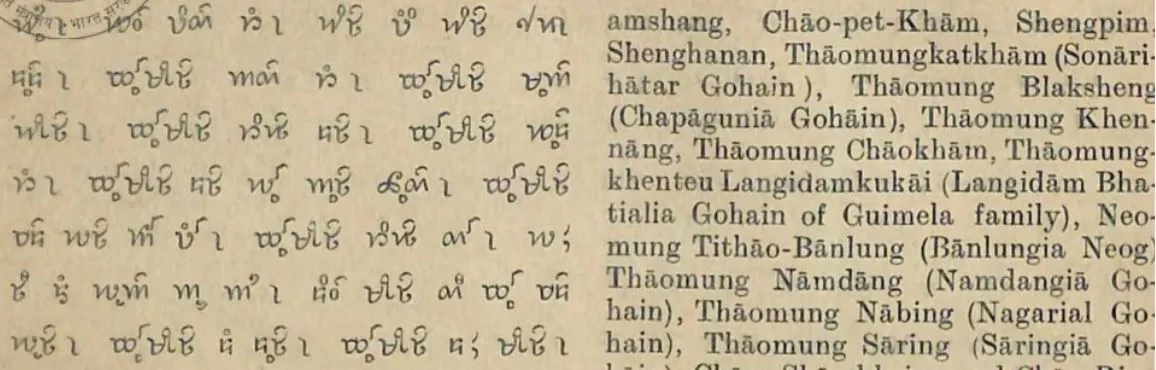
Ahom (Shan) Kings names are equally fascinating. In Serkapha, Ser - ᥔᥫᥴ means tiger kā - ᥐᥣᥲ means place and phâ - ᥚᥣᥳ means sky/heaven or the tiger from heaven. Note that there is no actual preposition from
but based on visualization of tiger and heaven, we imply the meaning as the Tiger at or from Heaven. Pretty much same as ancient Chinese - very vague and open to multiple interpretations.
Mispronounciation of Ser
Perhaps it would be very important to address all the wrong pronounciations such as Sukapha, Seukapha, Siukapha, etc. The word Siu (สิว) literally means pimple, so Siukapha actually means pimple from Heaven ! But why and how did this happen?
Bengali-Assamese there is no schwa /ə/. Hindi has it, but Bengali-Assamese doesn't.. So they changed it to Sukapha (in assamese script) and since ppl literaly forgot to read Ahom script everyone including the Ahom priests started pronouncing it as Sukapha
Now this problem is not just in Assamese but also in Chinese as Serkhanpha (သိူဝ်ၶၢၼ်ႇၾႃႉ) becomes SīKěfǎ (思可法) in Chinese. A lot of foreign-language words are changed when pronounced in Assamese (such as apple to aapel, namak to nimok) so same thing happened here but main problem is that even Ahom people are mispronouncing their own Kings names !!
Saying Sukapha/Siukapha instead of Serkapha is not just wrong, it is horribly wrong. As siu means pimple, so siu-ka-pha means the pimple from heaven.
In Tai, mispelling or mispronounciation of even one word can change its entire meaning. Precisely because it is so information-dense language special attention should be given in pronouncing all words correctly atleast the vowels, if not the tones.
Meaning of Ahom King Names
The following table lists names of all Ahom Kings (leaving out the ones without any Dai name)
| Roman | Ahom | Meaning | |
|---|---|---|---|
 |
Serkapha | sEw ka@ fa$ | Tiger from Heaven (lit. tiger-place-sky) |
|
Serteupha | sEw tCw# fa$ | Tiger walking in Heaven (lit. tiger-walk-sky) |
|
Serbinpha | sEw Binq fa$ | Tiger flying in Heaven (lit. tiger-fly-sky) |
|
Serkhangpha | sEw x,[q# fa$ | Tiger roaring in Heaven (lit. tiger-roar-sky) |
|
Serterpha | sEw tEw$ fa$ | Tiger touching the Heavens (lit. tiger-touch-sky) |
|
Tao Khamti | tw@ xmq# tI@ | Come from Golden Place (lit. come-gold-place) |
|
Serdangpha | sEw d,[q! fa$ | Spotted Tiger of Heaven (lit. tiger-spotted-sky) |
|
Seryangpha | sEw y[q@ fa$ | Glittering Tiger of Heaven (lit. tiger-glitter-sky) |
|
Serphakpha | sEw f,kq@ fa$ | Glittering Tiger of Heaven (lit. tiger-glitter-sky) |
|
Sersaenpha | sEw sVnq@ fa$ | Beautiful Tiger of Heaven (lit. tiger-beautiful-sky) |
|
Serhaenpha | sEw hVnq fa$ | Tiger looking at Heaven (lit. tiger-look-sky) |
|
Serpaempha | sEw pVmq fa$ | Little Tiger of Heaven (lit. tiger-little-sky) |
|
Serhongmerng | sEw hU[q mE[q# | Famed Tiger of Country (lit. tiger-fame-country) |
|
Serkerngmerng | sEw kE[q! mE[q# | Tiger Suitable for the Country (lit. tiger-suitable-country) |
|
Serkhampha | sEw xmq# fa$ | Golden Tiger of Heaven (lit. tiger-gold-sky) |
|
Sersaengpha | sEw sV[q fa$ | Diamond Tiger of Heaven (lit. tiger-diamond-sky) |
|
Serhampha* | sEw h,mq# fa$ | Tiger isolated in Heaven (lit. tiger-isolated-sky) |
|
Sertengpha | sEw tC[q$ fa$ | Heaven Striking Tiger (lit. tiger-strike-sky) |
|
Sertamla | sEw tmq# la! | Tiger of Emerald (မြ - emerald) |
|
Serpangmerng | sEw p,[q# mE[q# | Tiger who lifts the Country (lit. tiger-lift-country) |
|
Sernyatpha | sEw Ntq@ fa$ | Glittering Tiger of Heaven (lit. tiger-glitter-sky) |
|
Serkampha | sEw kmq fa$ | Heaven Grasping Tiger (lit. tiger-grasp-sky) |
|
Serhong | sEw hU[q | Time of wide-known fame (lit. tiger-fame) |
|
Seryenpha | sEw yCnq fa$ | Calm/Gracious Tiger of Heaven (lit. tiger-gracious-sky) |
|
Serdoipha | sEw doj fa$ | Mountain Tiger of Heaven (lit. tiger-hill-sky) |
|
Serlekpha | sEw lCkq# fa$ | Iron Tiger of Heaven (lit. tiger-iron-sky) |
|
Serpatpha | sEw ptq@ fa$ | Gem Tiger of Heaven (lit. tiger-gem-sky) |
|
Serkhongpha | sEw xU[q# fa$ | Tiger of Heavenly Abode (lit. tiger-gem-sky) |
|
Sertanpha | sEw tnq# fa$ | Tiger of Heaven (tán, kā, tī = place) |
|
Sernaenpha | sEw nVnq! fa$ | Skilled Tiger of Heaven (lit. tiger-skill-sky) |
|
Serhimpha | sEw himq# fa$ | Tiger on the side of Heaven (rim/him written as 𑜍𑜪𑜧) |
|
Seryeupha | sEw yCw fa$ | Tiger thinking in Heaven (tiger-think-sky) |
|
Serhetpangpha | sEw hCtq# p,[q# fa$ | Tiger who lifts the Heavens (tiger-think-sky) |
|
Serkerngpha | sEw kE[q! fa$ | Tiger Suitable for Heaven (lit. tiger-suitable-sky) |
|
Serdaengpha | sEw dE[q fa$ | Red Tiger of Heaven (lit. tiger-suitable-sky) |