Below is a compilation of some meaningless pseudo Ahom words
which are either completely made up
or a horrible misreading or misapplication of actual Tai words.
Khruptang
The Phake and Khamyang use khupbai (literally kneel-bow) as greeting.
With no where else to look, the Propagandists took this word and twisted it into
khuptang or khruptang which means kneel-all and which is literally meaningless and senseless.
And we you can't even use táng - all alone. So it's badly made-up word
by people who try to steal from hostile Shan tribes but also try to look 'unique'
The original word was khup poi (literally kneel-bow) Ref - Ma Likha Lit 12r.1
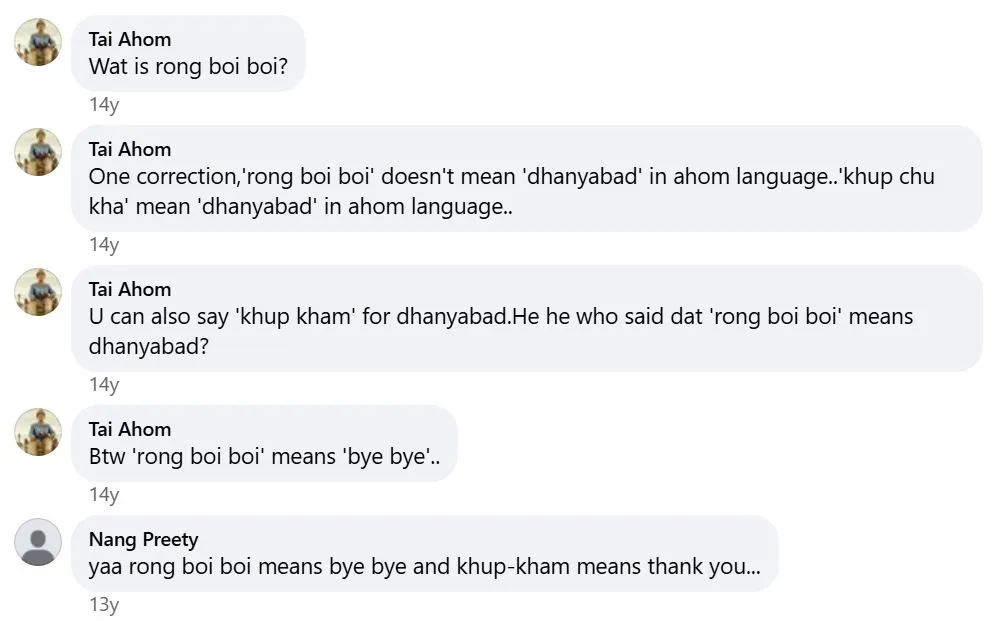
Rong Boi Boi
Another meaningless made-up word which literally means shout-bow-bow which the
propagandists
use as everything from thank you to bye bye. In fact it is such a meaningless word
that they are themselves confused on where to use it.
Sukapha, Suhungmung, etc
Now this is a classic case of misreading Ahom script by Assamese speakers, for which
I refer you read my manuscripts article.
Since they found no schwa in Assamese they forcefully shifted the /ə/ vowel to u,
so Serkāphâ /sʰə1-ka3-fa5/ (lit. meaning tiger at/from heaven) became Sukapha .
And similarly Serhongmérng became
Suhungmung. Now note that hong - fame whereas hung - cook which we will see
later as well
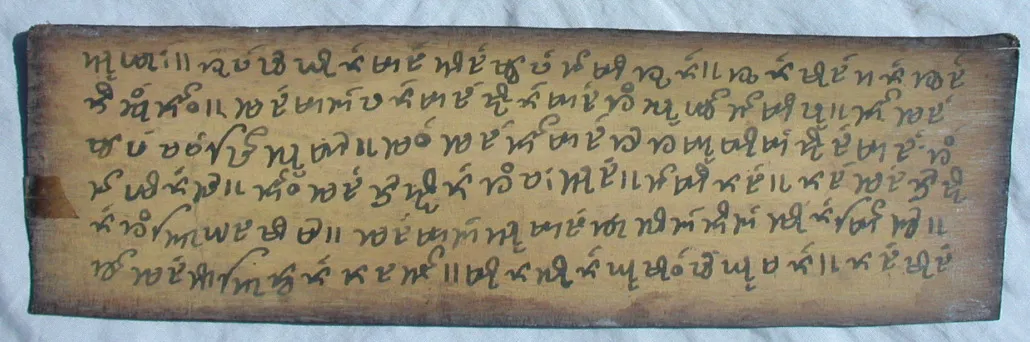
There is also a word Suklenmung which I read in manuscript found it was actually
𑜏𑜢𑜤𑜈𑜫 𑜀𑜢𑜤𑜂𑜫, 𑜉𑜢𑜤𑜂𑜫: Serkèrngmérng
or the tiger suitable for heaven. So even looking at script they can't read it properly and made kerng into klen.
So basically every single Ahom King's name is wrongly pronounced by even the so-called royal ahoms who claim to be
their grandchildren.
Mung Dun Sun Kham
Now it is actually 𑜉𑜢𑜤𑜂𑜫: 𑜓𑜥𑜃𑜫 𑜏𑜥𑜃𑜫 𑜁𑜉𑜫: - Mérng Don Son Xám or
เมืองดอนสวนคำ. Now note that sun - zero whereas son - field, garden and
don/ดอน - mound. So Mérng Don Son Khám means the country of golden fields and mounds.
A perfect way to describe Upper Assam Valley.
Pharu, Phasu
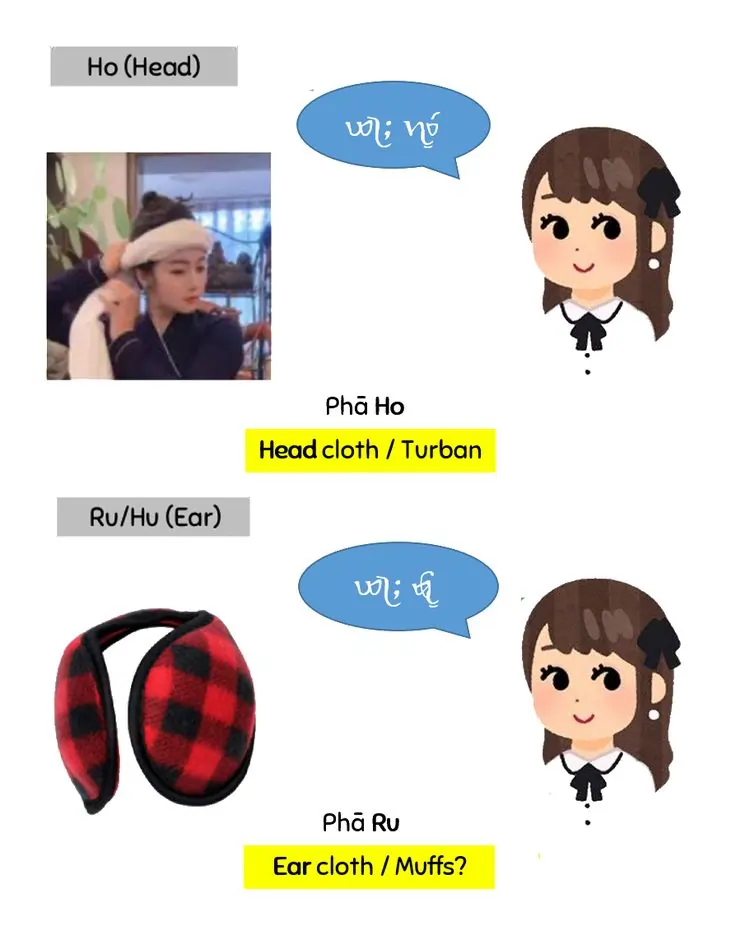
Again a very bad reading problem. 𑜍𑜥 ru/hu - ear and
𑜑𑜥𑜈𑜫 ho - head. So you want to say Phā-ho or the clothing
for head not the clothing for ear. And phasu is not even a word, it is their misreading of
𑜏𑜢𑜤𑜈𑜫; sēr - shirt. So it is Phā-sēr not phasu!
Ho (หัว) means head while hu/ru (หู) means ear
Mohung
As already said hong - fame whereas hung - cook/boil so 𑜉𑜦𑜡 𑜑𑜥𑜂𑜫 Mawhong - famed teacher/shaman
whereas 𑜉𑜦𑜡 𑜑𑜤𑜂𑜫 Mawhung - to know how to cook.
And it' very relevant because putting your name in order Raju Mohung will translate
as 'Raju knows how to cook' as against Mohong Raju or 'the famed shaman whose name is Raju' - well if u know what i mean
or if you don't check other articles on Dai naming rules.
Moidam
Now this is particularly relevant because we have got UNESCO using this name which is feel is curruption of
𑜓𑜩𑜨 𑜓𑜪: ດອຍດ້ຳ - doidám or loidám or literally spirit mountain. Another word
used for such mounds in Tai literature is 𑜓𑜩𑜨 𑜇𑜣 ດອຍຜີ - Doiphi which
literally means the same thing. But Moidam/maidam doesn't make any sense to me. Maybe the word doi/loi was corrupted as moi
Charaideo
I am not very particularly sure about it but rēr 𑜍𑜢𑜤𑜈𑜫; means to shine
while rāi 𑜍𑜩; means n. upland field or v. to cry and I am not quite
sure of the manuscript spelling but I feel it should be Chae-rer-doi or the city shining on the hill. I will
read more manuscripts before 100% confirming on this one. For now keep it in the gray area.
Lachit/Lasit Borphukan
Now this guy's name is not even Lachit, Lasit or Lasit-aditya as one Dimasa author call him.
The word Lachét literally means the number seven in Dai language. Number-names are very common in Dai
so you have Saam (3), Hok (6), Ched (7), Song (2) and what not.
And La is merely an old Ahom affix as seen in Laluk, Langi, Lahon, Lasheng, etc.
Again this is the case of misapplication of a word. Meaning although the word 'Ngi Ngao Kham' is not wrong but the place where it is applied is wrong.
The Ahom Dragon's name is not Ngi Ngao Kham, it is actually Long Len Fa which is described in detail in this article
Rupak, Rujang, Ruring etc
See the Ahom Surnames article for this one. But basically
it is Hopak, Hozhang, Hoheng, etc. Cause you are talking about centurion or someone in charge of hundred heads
not hundred ears and so on.
Conclusion
So far I haven't found more words. But obviously there are many more. If I find I will update. But I have to say
that what you call as Ahom Revivalism in the mainstream world, isn't actually Ahom Revivalism but purely a propaganda
machinery. An entire book has been dedicated on it by Yasmeen Saikia right from top-to-bottom power machinery
and although her work is more anthropological, BJ Terwiel's work is more on the linguistic side. These propagandists
still insist that there are some priests who can speak Ahom language and initially lot of Academics even believed them
and came to Assam from far-away places only to be disappointed meeting alcoholics who started demanding whisky from them
in the name of giving information that they never even had.
I believe all propagandists of Pathsaku, Moran Tai Institute, Tai Sahitya Sabha, etc lack even basic honesty to accept
that they can't even speak one word of Tai and even basic Tai phonemes and tones go above their heads.
What they do instead is invent their own meaningless neo-constructed language for
propaganda work and fooling public while at the same time uniting everyone in claiming minority benefits or stirring emotions
and doing politics with an identity that isn't even theirs. I don't think it can be stopped soon. But I hope
people who claim to be Dai Ahom have some basic love and respect for actual Dai language and not whatever
these propagandists claim to be.
 Learn Ahom