This article only serves as a basic primer and guidelines for reading Tai manuscripts. Please check Ahom Manuscripts Project for more comprehensive learning.
There has been some debate one how to read words like 𑜎𑜡 𑜋𑜢𑜄𑜫,
𑜋𑜈𑜫 𑜏𑜢𑜂𑜫 which are often rendered as 'Lachit', 'Chaosing', etc all of
which shows extreme incompetence and lack of knowledge of how to even read Dai manuscripts
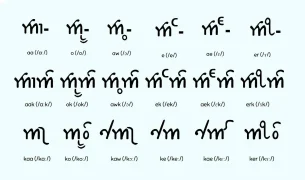
The [e], [ɛ] and [i] vowel
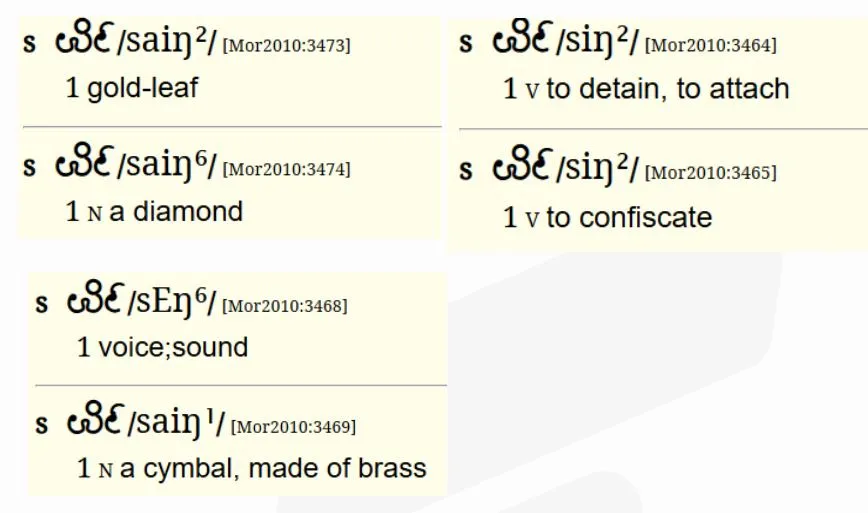
An important thing to note is that, traditionally [e], [ɛ] and [i] medial vowels all share the same grapheme
𑜒𑜢. For example the layman person will read 𑜏𑜢𑜂𑜫 as sing but it can also be
seng (sound) or saeng (gem). The trick is to understand the context and how the word contributes
to the overall meaning of the paragraph or the phrase it occurs in.
An example is the word 𑜎𑜡 𑜋𑜢𑜄𑜫 which is read verbatim as 'Lachit' but based on
similar number-names of other military generals like 𑜎𑜡 𑜆𑜢𑜄𑜫 (Lapet) and 𑜎𑜡 𑜏𑜪 (Lasham) we know
that it is number seven for chet - beyond doubt. Hence it is Phukawnlung Lachet not Lachit Borphukan
which is the twisted Assamese mispronounciation of the Legendary Dai Ahom warrior's name (the word La- is an ancient
Dai Ahom affix also found today in the family name Lahon).
Phukawnlung Lachet - A Victim of Language Shift and Aryanisation*
Perhaps some examples from Phake dictionary might help you understand the issue better. Note that
majority Phake people cannot read their script. And the knowledge of reading old Phake manuscripts is only
available to few selected individuals. In case of Khamyang, Chao Chikseng Thoumoung is the last individual
who is able to read Tai Khamyang manuscripts, because he is the only person who has the memorization of
all the words in the overall context of the recorded manuscripts (I am grateul to have met him personally).
Common Grapheme for i,e and ae in Traditional Dai manuscripts
This [i] vs [e] vs [ɛ] problem can also sometimes occur in final position as the word for
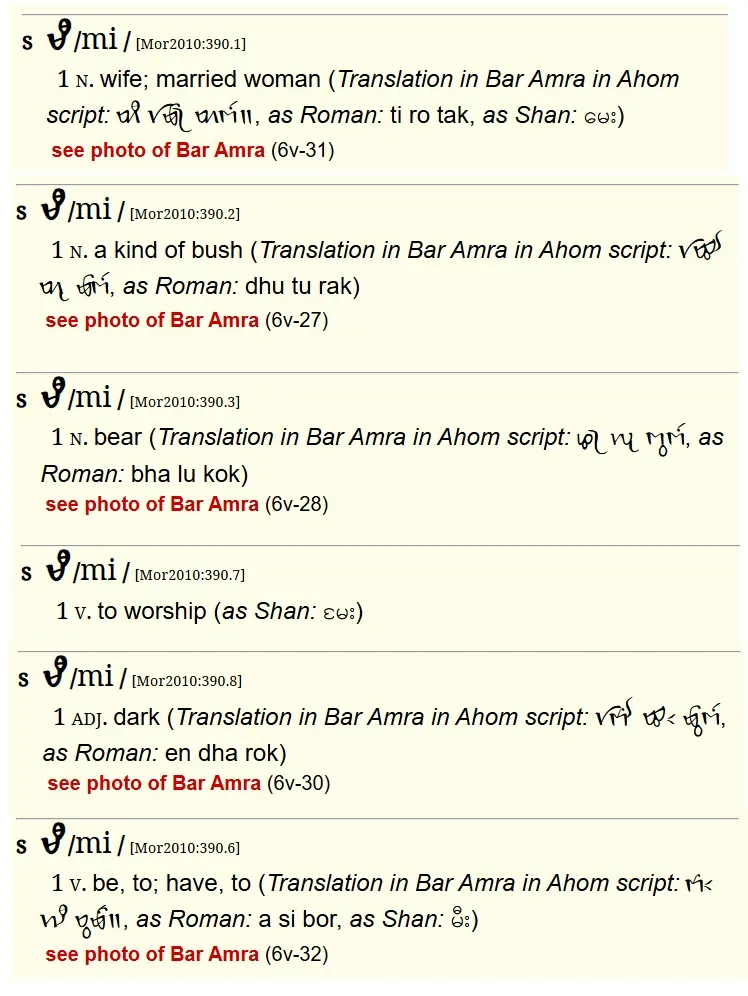
wife is actually written as 𑜉𑜣 (mi) instead of 𑜉𑜦: (mé) - n. wife. So only
through context a person can tell where the manuscript-writer is talking about wife and where
he is talking about bear (both of which are written the same way but pronounced very differently).
Similarly 𑜉𑜦𑜧: máe - v. worship (as in mae dam mae phi) is also written as 𑜉𑜣 which confuses it for 𑜉𑜣: (mí) - v. to have
So, in short just because a person knows Ahom script, doesn't mean he can read even one line of Ahom manuscripts because
most of these words are not even pronounced the way they are written (and there is also issue of tones which
we will see later)
Different meanings of 𑜉𑜣 in Ahom Manuscripts
The [a] vs [a:] medial vowel
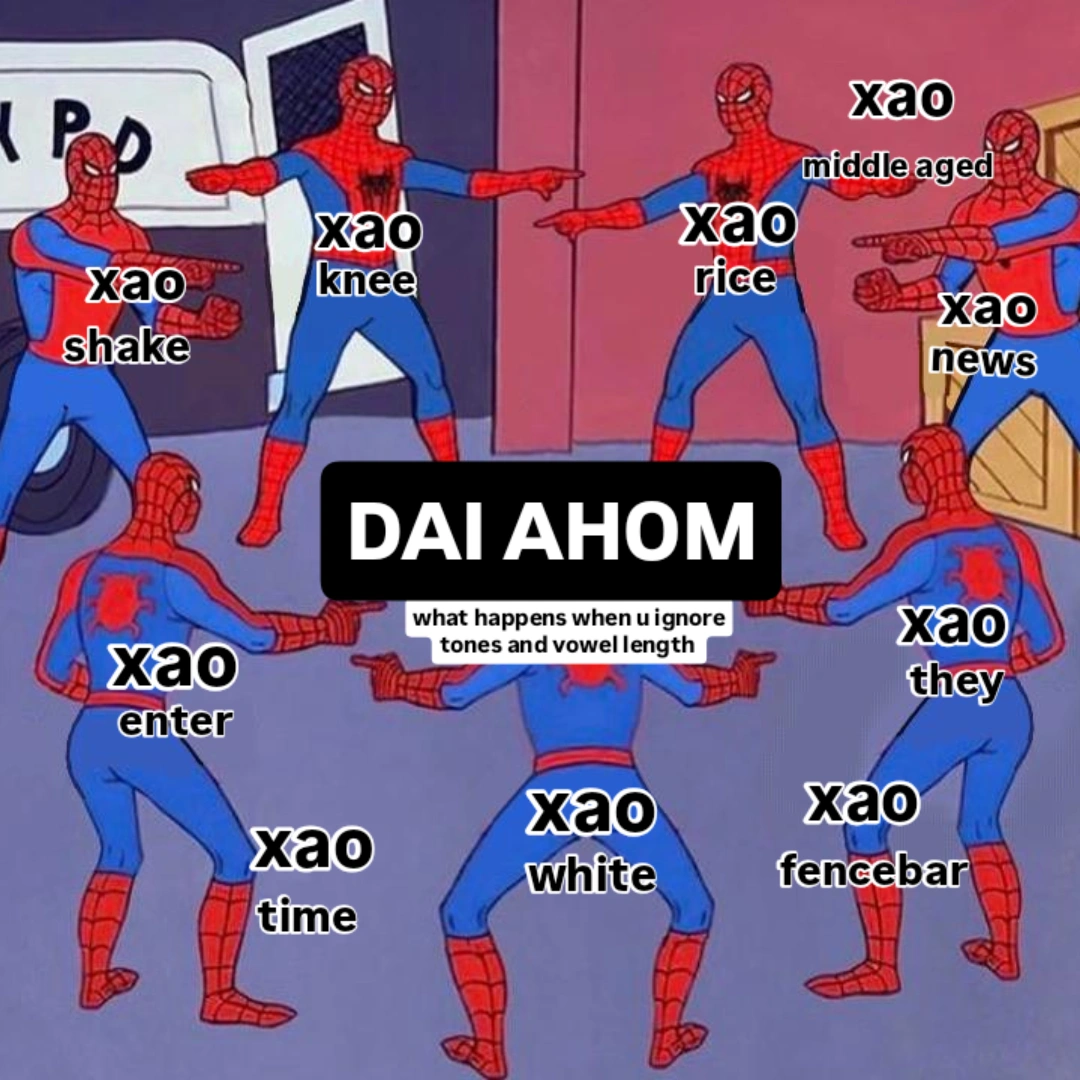
What does the word 𑜀𑜤𑜃𑜫 𑜄𑜩 mean? 𑜀𑜤𑜃𑜫: 𑜄𑜩: (kún tái) or Tai people (คนไตย)?
But it can very much also mean 𑜀𑜤𑜃𑜫: 𑜄𑜩า (kún taai) or
dead people (คนตาย)! So how do we know? We can't if the context is too broad but mostly in context of manuscripts we
already have a pre-defined setting and a limited world (such as concerning the kings and queens) so it is not always impossible to guess but this particular
case if someone already has memorization of the words, it can help. You can see this meme to understand
why vowel lengths matter so much.
The hidden [o] vowel
Should the word 𑜑𑜤𑜂𑜫 be read as hung or hong? Such as when we say
𑜉𑜦𑜡 𑜑𑜤𑜂𑜫 can either mean maw (shaman) 𑜑𑜥𑜂𑜫 hong (famous) or the famed-shaman, or it can mean
maw (to know,skilled) 𑜑𑜤𑜂𑜫 hung (cook) or literally to know how to cook, or a person skilled in cooking.
So is it a famed shaman or is it a cook? Hopefully we already know that Mohongs were priests but note how
hung vs hong can change the entire meaning, although both are written as just 𑜉𑜦𑜡 𑜑𑜤𑜂𑜫 in manuscript Ahom.
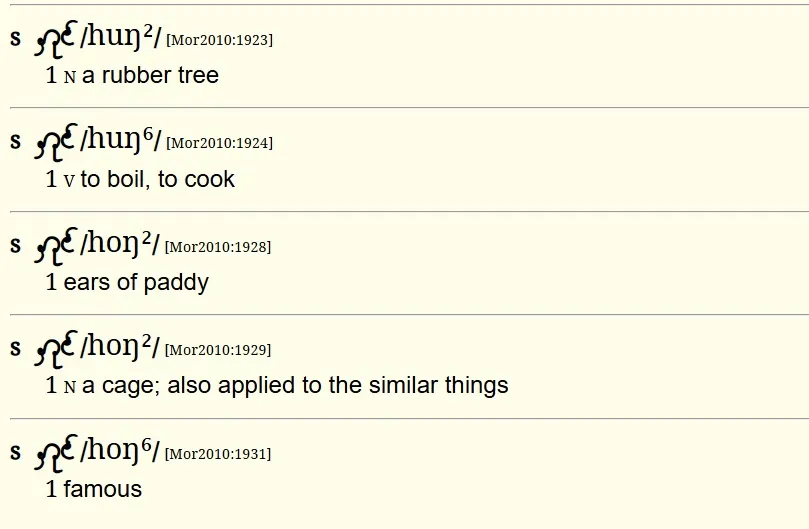
So if you see any person using words like Mohung, Suhungmung pls correct them to say Mohong, Serhongmerng, etc. Just for clarity I have shared entry from Phake dictionary having same script issue of what I call the hidden [o] vowel.
Hung vs Hong - Note how they are written the same way
And btw this is a problem not just for medial [o] but also for final [o:] which is why I call it
the hidden [o]-vowel problem. An example of this is the headgear which a lot of pseudo-Ahom
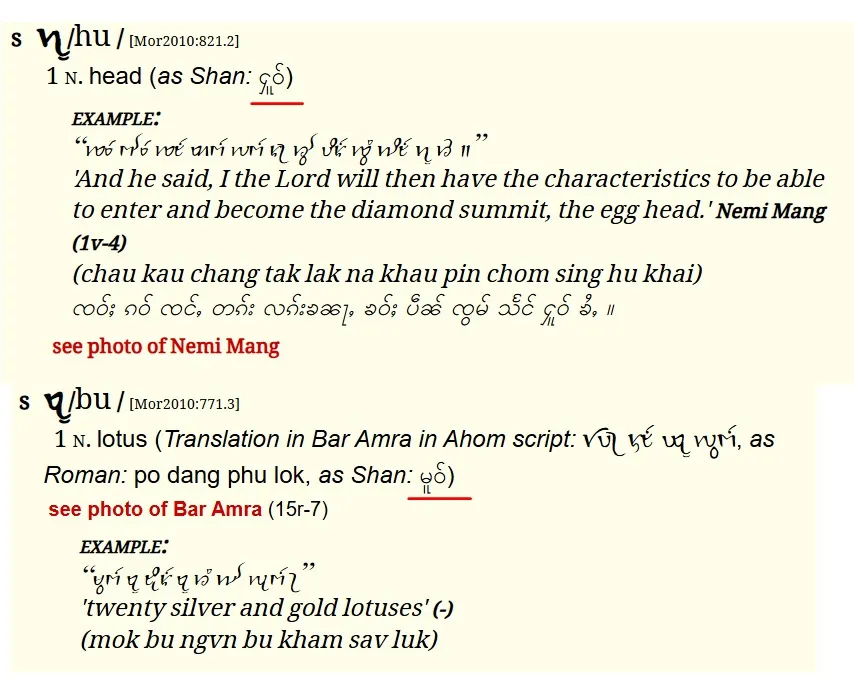
Revivalists call as pharu. But the word 𑜍𑜥 ru actually means ear.
Then what does head mean? It is also written as 𑜍𑜥 ru but it is pronounced as ro.
Some Comparative Tai for clarity, (Thai/Lue/Shan)
หู / ᦠᦴ / ႁူ / hu - ear
หัว / ᦷᦠ / ႁူဝ် / ho - head.
So in short,
𑜍𑜥𑜈𑜫 (ro/ho) head and 𑜍𑜥 (ru) ear.
But note that Ahom manuscripts also use the h-initial for ho. So the word pha-ho (ho instead of ro) has manuscript justification too, same goes
for Hopak, Hosao, Hoheng, Hozhang, etc which pseudo-Ahom revivalists erraneously say as Rupak, rusao, ruring, ru-chang, etc.
Another example of hidden [o] vowel problem. Same grapheme is used for pig and lotus (𑜉𑜥) and for head and ear (𑜍𑜥)
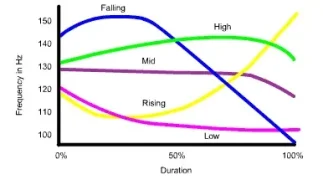
The Tone Marks
If the issues of vowel length, hidden [o] vowel, common grapheme for
medial [i], [e], [ɛ] were not enough, we still have the big issue of tone marks. And
in case of Old Ahom we don't even know the number of Tones, much less their form or nature.
What we can do however is find cognates with other Tai languages and guess their meaning (and
I use the word guess because you can never be certain)
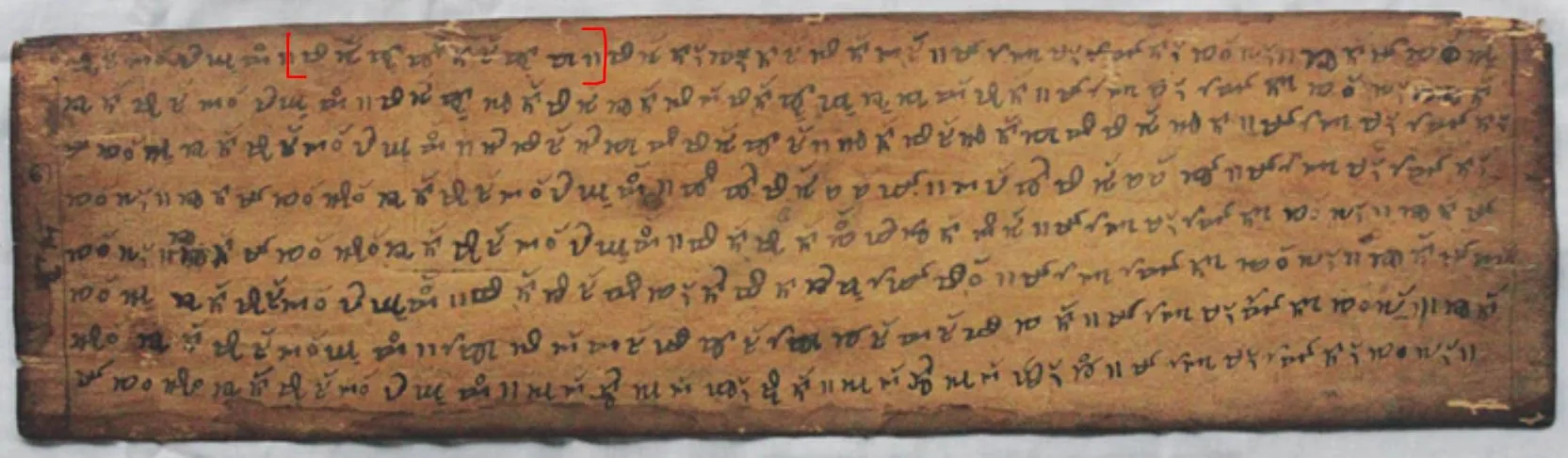
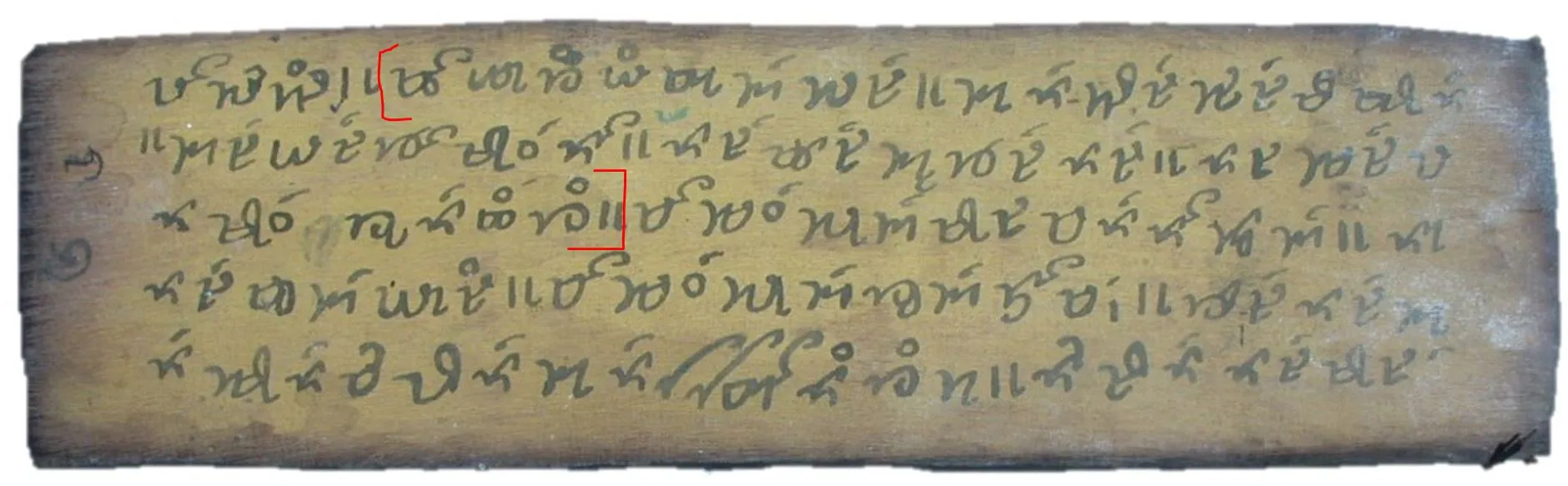
Coupled with the above problems, let us now look at Ming Mwng Lung Phai manuscript (folio 6v)
Ming Mwng Lung Phai folio 6v
In transcribed text 𑜉𑜢𑜐𑜫 𑜍𑜥 𑜍𑜣 𑜃𑜂𑜫 𑜍𑜥 𑜈𑜡𑜉𑜢𑜐𑜫 (men) - hill tribal and 𑜍𑜣 (ri) - long can be fixated
The entire sentence can then be translated as
1. The Hill Tribals with long heads sit on the shoulder 𑜈𑜡 - shoulder (ဝႃႇ), 𑜍𑜥 - head (ႁူဝ်)
2. The Hill Tribals with long ears sit on the shoulder 𑜈𑜡 - shoulder (ဝႃႇ), 𑜍𑜥 - ear (ႁူ)
3. The Hill Tribals with long heads like dogs 𑜈𑜡 - dog (မႃ), 𑜍𑜥 - head (ႁူဝ်)
4. The Hill Tribals with long heads like horses 𑜈𑜡 - horse (မႃႉ), 𑜍𑜥 - head (ႁူဝ်)
5. The Hill Tribals with long ears like dogs 𑜈𑜡 - dog (မႃ), 𑜍𑜥 - ear (ႁူ)
6. The Hill Tribals with long ears like horses 𑜈𑜡 - horse (မႃႉ), 𑜍𑜥 - ear (ႁူ)
The first two possibilities can perhaps be rejected and we can interpret 𑜈𑜡 vs 𑜉𑜡 as a
mistake of the scribe while copying (morever in many manuscripts it is very difficult to even tell them apart).
So we are left with the last four possibilities and we can't rule any one of them and all are
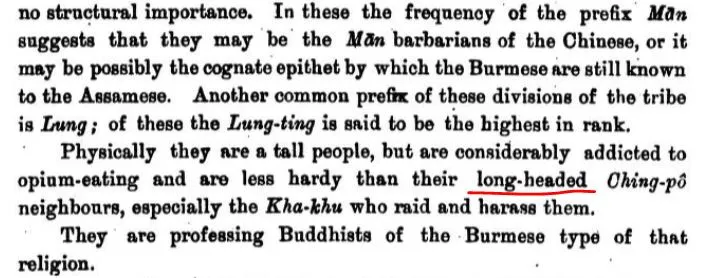
equally possible. But then again, this is an anthropological account not fictional story so we have something to compare to. And in British orientalist writings many hill tribals are compared to having long heads (Waddell 1900), so we can finally lock our translation as option 4 (because obviously dogs don't have long heads).
Waddell (1900) describing Singhpos in Chin as having long-heads (like horses)
Reading a Sample Manuscript
The most basic part of translating a manuscript is first transcribing it. This varies from manuscript to manuscript and depending
on the calligraphy, just this much process can take several hours. Hopefully we will use a easy to read manuscript to explain
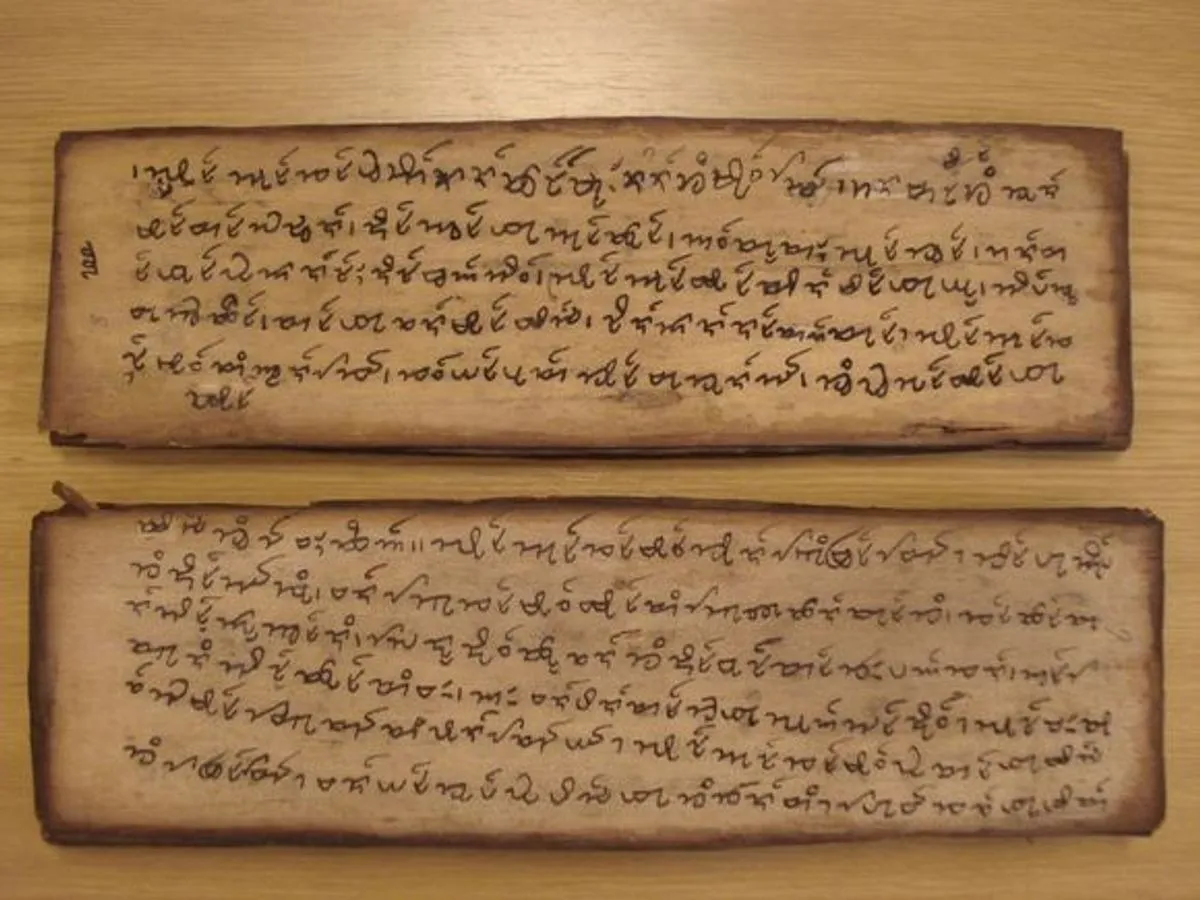
the process. Such as Ma Li Kha Lit-6v2
Ma Li Kha Lit-6v2 - An example of Ahom Poetry
The transcribed text is
bo] fa xM yM tukq l[q / kunq si[q N[q mI tEnq / k[q y[q. x] mEw n] / n[q r[q kU x[q n[q / n[q c[q pnq mEw xunq vM xM /
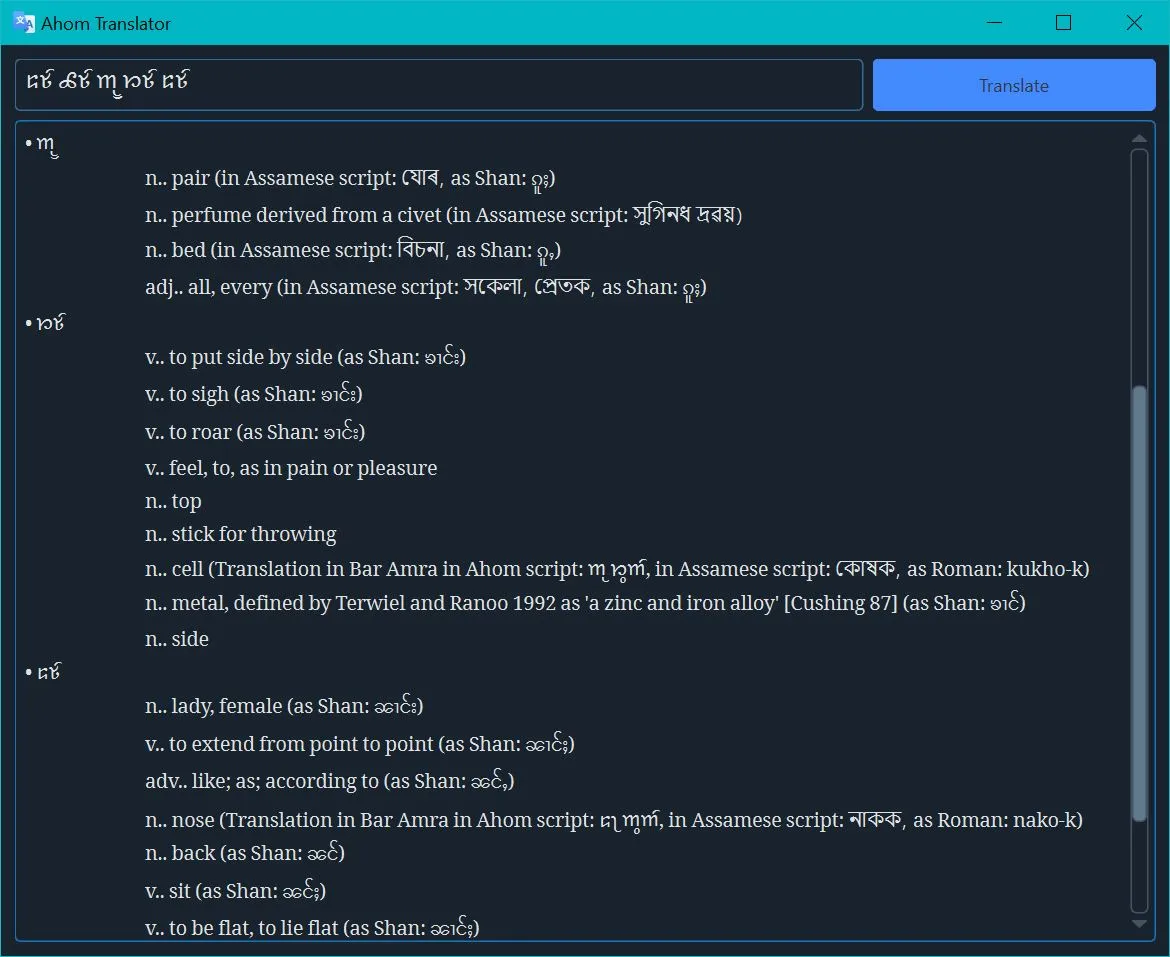
You can copy-paste and search each word in sealang dictionary or you can use
our fancy tool to accelerate this process (after first converting the font to unicode)
Example Working of Ahom Bulk Lookup Tool
Please note that this tool still just uses sealang dictionary as backend, for more detailed results you might have to use multiple
dictionaries which is a tiring manual process. But when we arrive at our results we just re-write the whole thing in Modern Dai Ahom,
which looks like dis-
m]! fa$ xmq@ y,M# tukq# l[q / kunq@ sC[q@ y[q# mI# tEnq! / k[q y[q$ xw@ mEw# n]# / n[q@ r,[q! kU! x,[q# n,[q# /
n,[q# c[q! pnq@ mEw# xunq v,M x,M# /
màu phâ xām yáam túk lang. kūn sēng yáng mī tèrn. kang yâng xāo mér náu. nāng ràang kùu xáang náang.
náang tsàng pān mér xun thaam
The prince (màu phâ) [came] in the late evening (xām yáam túk lang). The
many people (kūn sēng) have not yet (yáng mí) woken up (tèrn).
Tiptoeing (kang yâng), [he] entered (xāo mér) inside (náu).
[He] sat (nāng) on the bed (ràang kùu) beside (xáang) the princess (náang).
The princess (náang) then (tsàng) grasped (pān) the hand (mér) of
the prince (xun) [and] asked (thaam) [him].
This is essentially the bridge between Old Ahom and Modern Ahom. The former is unreadable but latter is read just
like normal English, and after converting manuscript ahom to modern dai ahom anyone can easily read the manuscripts, which
should be one of our future projects.
Final words
The point of this article is that although Original Ahom Language became extinct more than 200 years ago
it is not entirely impossible to translate Ahom manuscripts, although it requires great skill and help of other
traditional Tai scholars (who have the ability to read their own Dai manuscripts). Golap Chandra Barua himself used
to take help from Tai Phake scholars to compile Ahom-Assamese-Dictionary (1920) and Ahom-Buranji from the Earliest Time to the End of Ahom Rule
(1930), which although faulty still became important milestone for base of Ahom Studies.
It is worth mentioning that reading Dai manuscripts is an altogether different skill
from merely being a Dai speaker. So lot of Shan and Khamti speakers also have great difficulty
in reading their traditional manuscripts because these manuscripts were not written for everyone to
read. However with a bit of guesswork, it is possible to decipher their meaning to some extent. As
Ahom youths become more and more fluent in Dai, we will probably see a new wave of scholars
who can help us deipher vast amount of untranslated Dai manuscripts. Til then keep learning !
PS: If anyone here is interested in our future manuscripts translation project then pls contact admin@learnahom.com.
Let's work together and see what we can do
 Learn Ahom