
 Learn Ahom
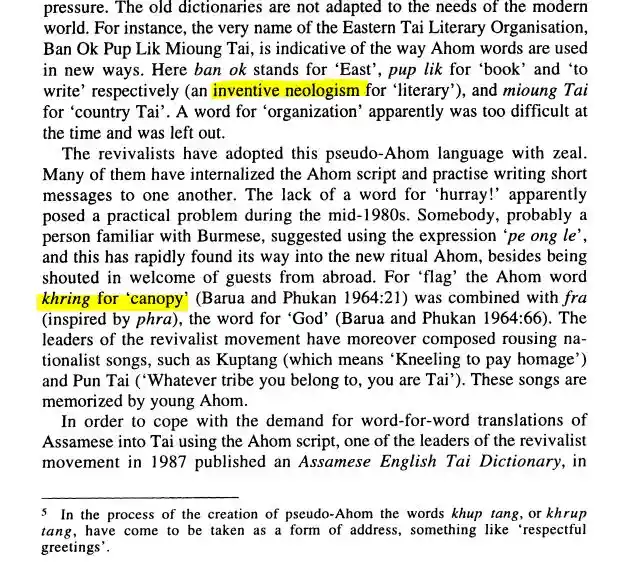
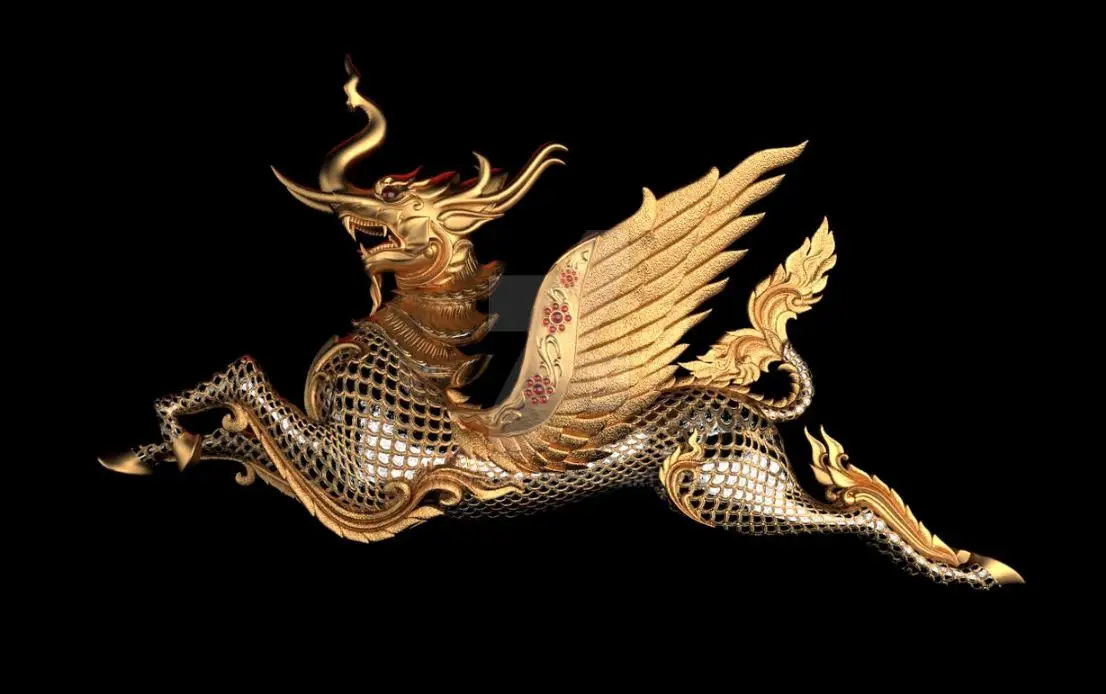
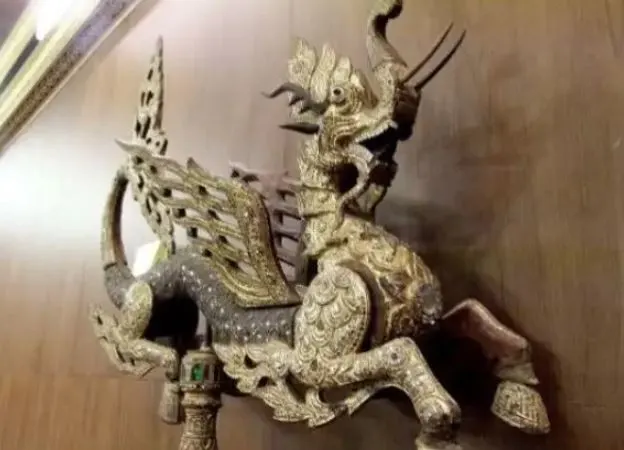
If you go to Ahom Museums you will often find a canine-like figure head being called as Ngi Ngao Kham and even so-called Ahom history experts like Nobin Buragohain have made tons of videos fooling their audience about this entirely fake misappropriation and misapplication of a word. In this article we will prove how Ngi Ngao Kham is completely made-up word and not the actual historical name of the figure.
The Early Ahom Movement
In the 1970-80s Ahom grandpas were struggling with their new Ahom movement. First they didn’t know any Tai and second they didn’t have any flag. There was some knowledge about the serpent figures and Ahom chimera/dragon like emblem which was used throughout coins, inscriptions, etc. but no one knew what it was called (the Assamese people just called it singha). So they read Ahom Buranjis (1930)[1], and in the very first chapter (compiled from Deo Buranji / Pvn Ko Mvng) they found a neat little story of the youngest son of God, Ngi Ngao Kham also called as Phura and Voila ! They not just found a Tai sounding name for this figure, but also a certain history to ascribe to this. Thus the emblem was called Ngi Ngao Kham and the flag became ‘Khring Fra’
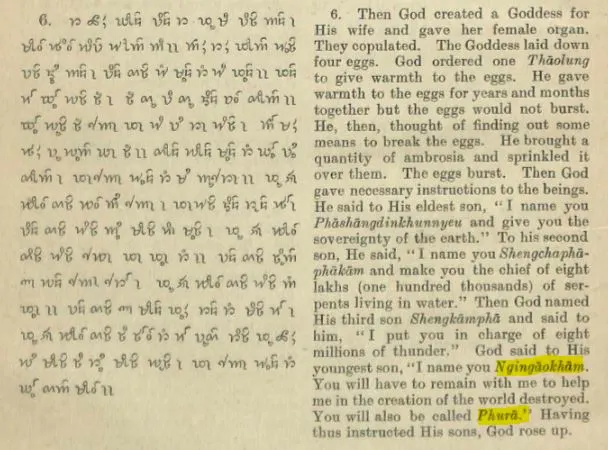
The manuscript from where this is taken is dated 18th CE[2] so I believe this myth couldn't have
been invented before 17th century. And yes I am saying invented because this is not a generic Tai myth unlike the story of Khun Lung
Khun Lai or Möng Ri Möng Ram. Infact there are no characters like Lengdon, Yasengfa, Ailaengdin, etc among other Tai people. We can draw
many conclusions from this, either the Ahom priests were inspired by Hinduism or they were trying to tackle Hinduism by making their own
Ahom Gods in line with Hindu Pantheon. For eg., the Bamuns had also called Ahoms as descendant of Indra and "low-caste" Shyam / Shan woman so
they may have created Tai version of Indra (Lengdon) to stop Ahom Kings from forgetting their Tai heritage.
Whatever be the case, but this story of Ngi Ngao Kham is found only among Ahom. And the word Phura/Phra comes from Pali word vara meaning top, noble or excellent which can be used
in many contexts – Buddhist Tais use it for Buddha, Christian Tais use it for Jesus, but Ahom Animism is idol-less. Even the neo-Gods like Lengdon etc
are still thought of as higher-ranking spirits and thus do not have any idol. Hence calling this mythical animal as Ngi Ngao Kham
is not just historical misappropriation but also a violation of Dai Animist traditions of making an idol of a godly spirit. Another word
'khring fra' or khing phura is also a clear misomner when used for flag. In manuscript context put khing phura
means who will succeed Phra (God) but as a word for flag this term is wrong, as the word for flag is làam
which is a Burmese-loanword as Tai doesn't have native word for flag. This thing was pointed by B.J Terwiel[3] as well