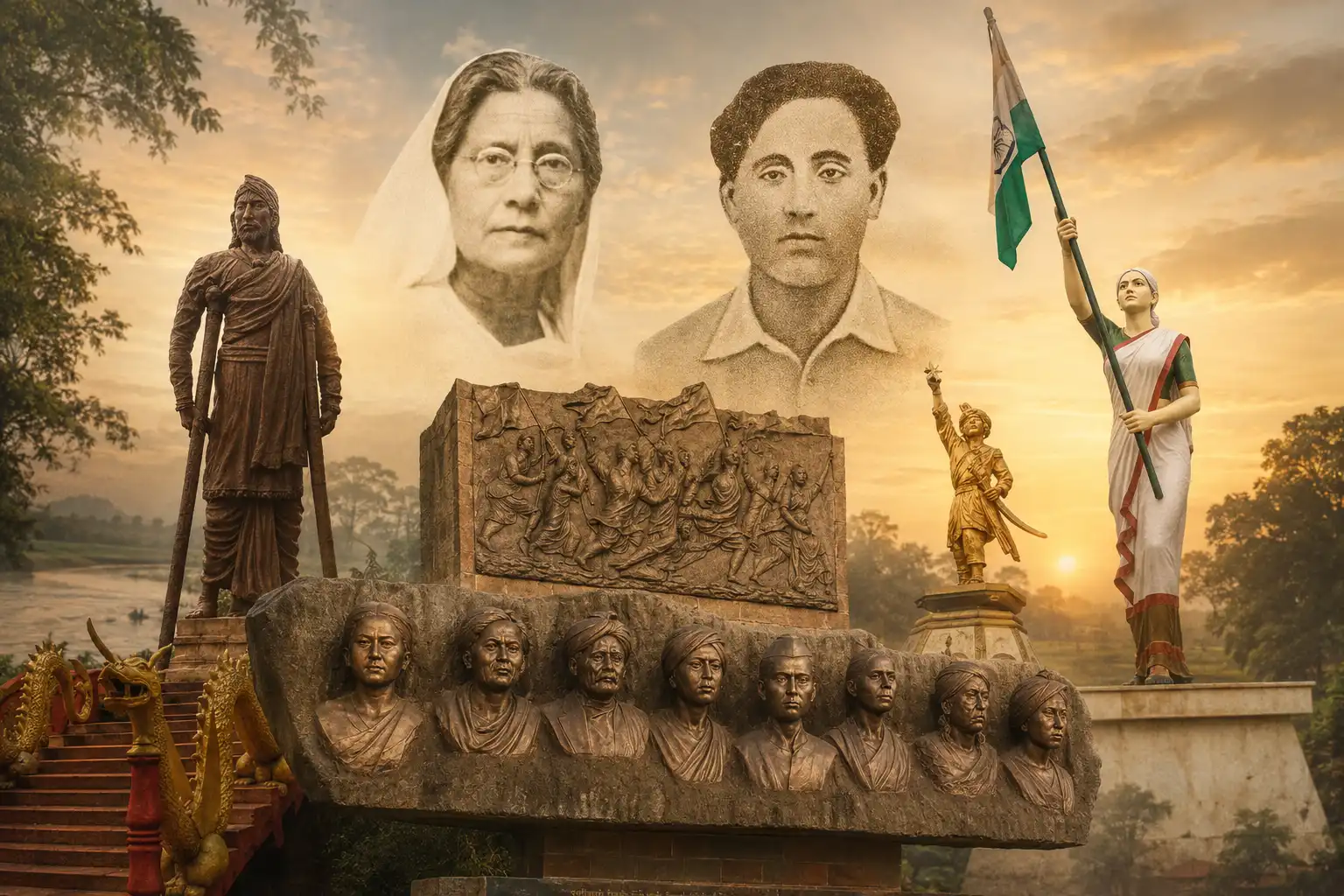
Very few people might know this, but the first person to be hanged for freedom struggle by the Britishers was an Ahom person – Piyoli Phukon. And similarly there are many stories of Ahom Freedom Fighters who don't get enough space in Indian history. In this article, we will learn about the unsung heroes and the Dai Ahom freedom fighters which your NCERT books don't teach you about.
Piyoli Phukon – The First Martyr of India
Mangal Pandey is regarded by Indians as the first person to die for freedom struggle but long before Mangal Pandey was hanged in 1857, an Ahom revolutionary from Assam had already paid with his life for resisting British rule. Piyoli Phukan was executed in 1830, decades before Mangal Pandey, for taking part in Gomdhar Konwar's rebellion which if successful would have been the first armed resistance against British. But Britishers foiled the plan and hanged Piyoli Phukon for taking part in the conspiracy.
There is a 1955 Assamese movie Piyoli Phukon by Phani Sarma which retells his story in detail. Piyoli was actually the son of Badan Borphukon whose name is used as a traitor as he invited Burmese to invade Assam, whereas his son is regarded as biggest patriot who died fighting for freedom of Assam (and India by extension)
The Government of Assam started a college in his name, viz Swahid Piyoli Phukon College
Gomdhar Konwar – The Rebel Prince
Gomdhar Konwar was a member of the Ahom royal family and the titular prince of the erstwhile Ahom Kingdom. He grew increasingly resentful of the British presence in Assam, particularly their exploitation of the region and the way they treated the remnants of the Ahom royal establishment with disregard.
When Ahom King Purandar Singha asked the British for help to fend off Burmese raiders in 1818, but British had initially refused citing their policy of non-intervention and when they finally went to war with Burma in 1824-26 to end its occupation of Assam, instead of simply restoring the status quo ante bellum and transferring power back to Ahom kingdom, the British themselves occupied the region for their own interests. This was seen as betrayal by the Ahom Royals and this anger eventually pushed the Ahom Prince Gomdhar Konwar to take up arms against the British in 1828, making him the earliest-known figures in India to openly challenge the British and plot a rebellion against them.
But unfortunately the British Intelligence got a wind of his plans and stopped him before he could begin the insurrection. For this conspiracy, Gomdhar Konwar was exiled by the British, his royal blood helped commute his death sentence to seven years of imprisonment in exile.
Gomdhar Konwar ((1807-1849) was the first person in India to plot a rebellion against the British
Later to follow their strategy of using native rulers against natives, the British tried to repair their relations with the Royal family and installed Purandar Singha as the King of Assam-Proper in April 1833 after formal agreements and letters outlining a pledged annual tribute of 50,000 rupees.
But Purandar Singha failed to keep up with the annual payments and was eventually deposed in 1838 and died like a commoner. His last act of rebellion against British was refusing the pension of 1000 rupees (worth around 2-3 crore today) as he never wanted to legitimise British Occupation.
Later it was reported that the Britishers excavated his doi-dām where he was cremated and stole all precious family jewels that were buried along with him.
Kandarpeswar Singha – The Unsung Hero
Many Ahom people themselves don't know about Kandarpeswar Singha but along with Maniram Dewan he was one of the main masterminds behind the 1857 revolt in Assam. And again while Maniram Dewan was hanged and killed, Kandarpeswar Singha escaped capital punishment because of his royal blood and was reported to be imprisoned in exile in Calcutta for the rest of his life.
His involvement demonstrates that the question of Ahom sovereignty had not disappeared even after decades of British rule. For many of the rebels, resistance was not just an anti-colonial struggle but also an attempt to restore the local political system that had been displaced by the East India Company.
Piyoli Baruah and the 1857 Rebellion
Piyoli Baruah was closely associated with Maniram Dewan who sent him secret coded-letters to turn local troops over Ahom side and start a pro-monarchist movement. But these letters were decoded easily by the Britishers who caught Maniram Dewan and identified Prince Kandarpeswar Singha and Piyoli Baruah as co-accomplices.
As Kandarpeswar Singha belonged to the Royal Family he was imprisoned in axile, while both Maniram Dewan and Piyoli Baruah were tried and hanged at Jorhat on 26 February 1858. Their execution marked another major episode in the long resistance of Assam's former ruling establishment against British colonial rule.
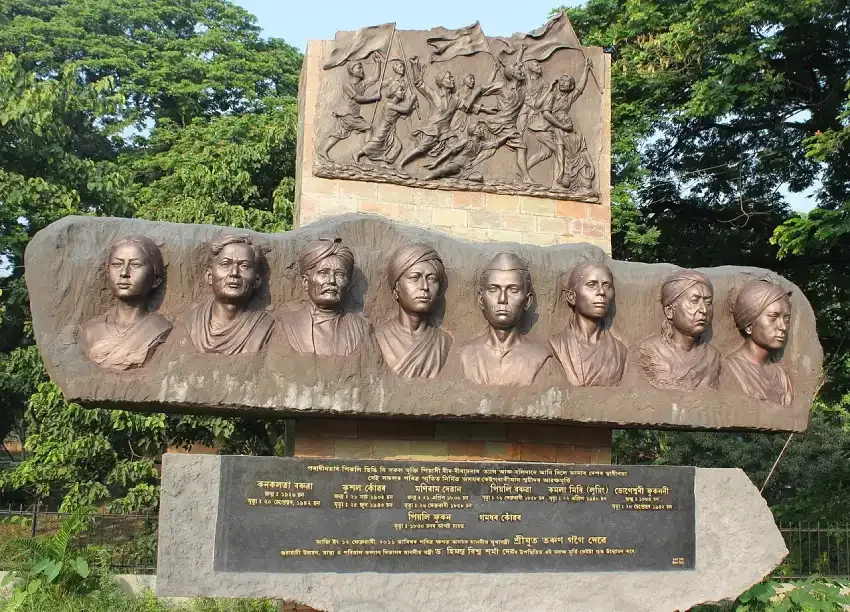
From Left to Right. Some Famous Freedom Fighters from Assam. Kanaklata Baruah, Kuxol Konwar, Maniram Dewan, Piyoli Barua, Kamala Miri, Bhogeswar Phukanani, Piyoli Phukon, Gomdhar Konwar. Except 2, all of them are Ahom
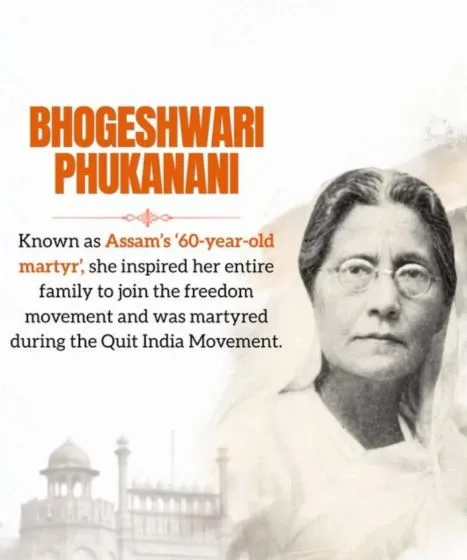
Bhogeswar Phukanani
Bhogeswar Phukanani was one of the figures who took part in the resistance against British rule during the later phase of the freedom movement. Although she was a mother of eight children, she took part in both 1930 Civil DIsobedience Movement and 1942 Quit India Movement.
The reports surrounding her death are vague but it is most widely reported that when she saw British Officer point gun at her son, she hit him with a flag pole and as a result died in the counter-fire. Other reports suggest that the British Officer was trying to disrespect the flag because of which she hit him.
Bhogeswar Phukononi, a 60 year old Ahom Martyr from Nagaon, Assam
Her death occurred a day later after she was shot meaning if Assam had good doctor she could have survived. A British-Era Christian Hospital was renamed in her honour known as Bhogeswari Phukanani Civil Hospital.
Kanaklata Barua
If Bhogeswari Phukanani was among the oldest martyrs then Kanaklata Barua (17) was amongst the youngest martyrs from Assam who along with Tileshwari Barua (12) were shot dead by British soldiers for participating in Quit India Movement and raising the flag of independence.
On 20 September 1942, the 17 year old Kanaklata led a procession towards the Gohpur police station with the intention of raising the national flag there. When the police ordered the procession to stop, she refused to retreat and continued forward with the flag in her hands. The police opened fire, killing Kanaklata along with other protesters. Her death at such a young age made her an enduring symbol of courage and sacrifice in Assam, and her story continues to represent the determination of ordinary Assamese people who took part in India's struggle for independence.
She belonged to an Ahom Noble family who held the Dulakaxoriya Barua Office. She is regarded as one of the youngest martyrs from Assam along with the 12 year old Tileswari Barua who is regarded as youngest female martyr of India.
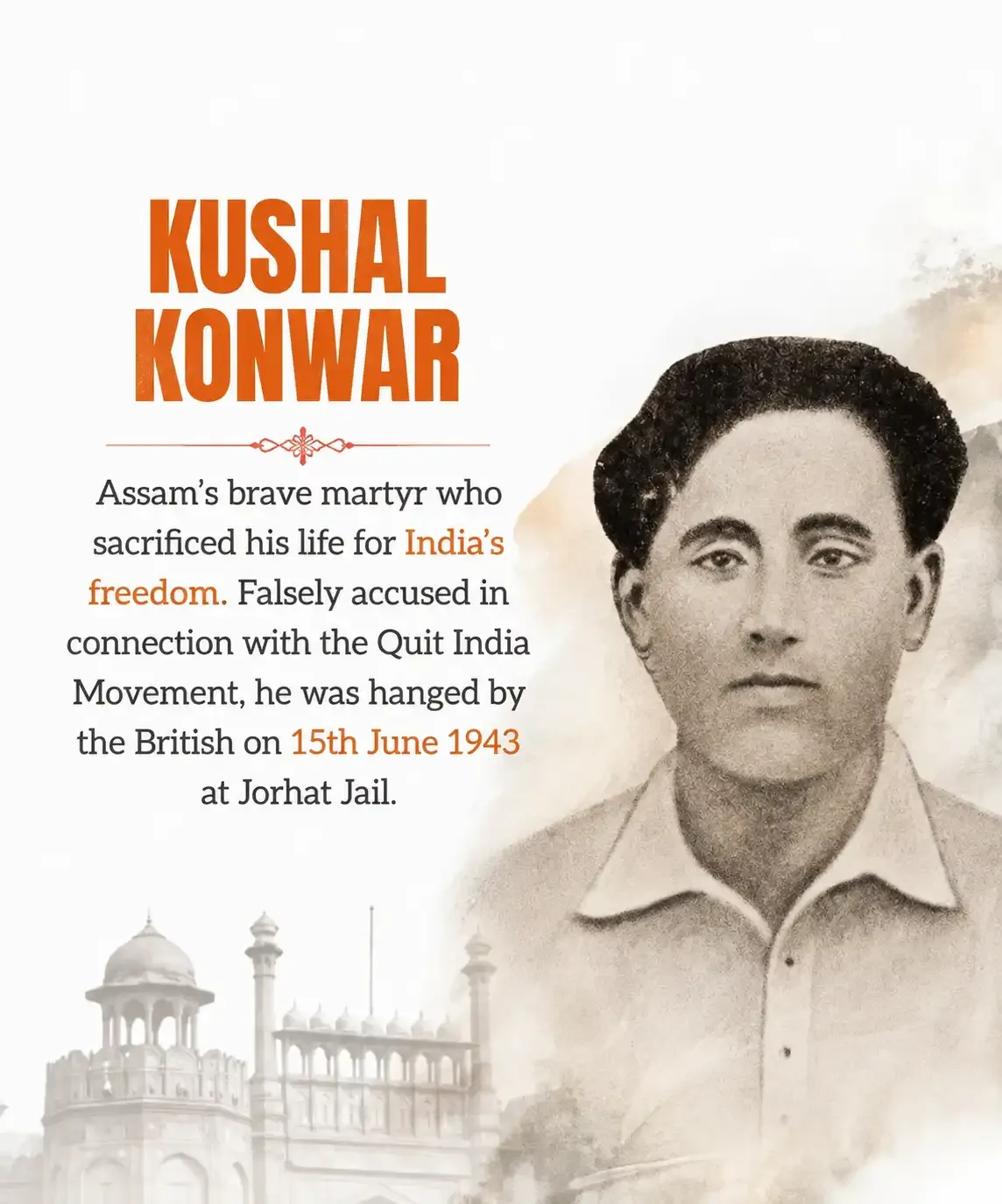
Kushal Konwar
Kushal Konwar is one of the most tragic freedom fighters of India. Born in 1905 in Balijan, near Sarupathar, he became deeply involved in the Indian independence movement and the campaign for non-cooperation with British rule. During the Quit India Movement of 1942, a train carrying British troops was derailed near Sarupathar. Although Konwar had no involvement in the incident, he was accused of conspiring in the sabotage and arrested by the colonial authorities. He was subsequently sentenced to death for something he never did.
On 15 June 1943, he was hanged at Jorhat Jail. And it is said that he faced his execution with remarkable composure, reportedly maintaining that even though the Britishers charged him under treason, he had in fact committed no crime against his country.
Kuxol Konwar, a tragic figure of Independence Struggle from Assam was hanged in Jorhat without a fair trial
His sacrifice made him one of the most revered figures of Assam's independence struggle, and his name remains closely associated with the courage and non-violent resistance of the Assamese people during the final phase of British rule.
Comrade Purnananda Gogoi
Purnananda Gogoi, popularly known as Second Comrade, is one of the lesser-known freedom fighters from Assam whose life remained closely tied to the struggle for India's independence. Born on 25 December 1925 in Amguri, he turned towards the freedom movement after narrowly missing his matriculation examination and chose to dedicate his life to the service of the nation.
Gogoi was associated with Netaji Subhash Chandra Bose's Azad Hind Fauj and received military training in Burma. He later became closely associated with Kalaguru Bishnu Prasad Rabha, serving as his bodyguard for fifteen months from 1945. During this period, he famously accompanied Rabha on foot from Guwahati to Amguri to ensure his safety. He also served as a bodyguard to the revolutionary leader Khagen Barbarua.
His involvement in the freedom struggle came at a great personal cost. He spent nearly one year and eight months in different jails, including those at Jorhat and Nagaon. In November 1950, he was also shot in his right hand during a clash in Dibrugarh, an injury that became another reminder of the sacrifices he made in the years following India's independence.
Despite spending his life in the service of the nation, Gogoi has reportedly not received a freedom fighter's pension or formal recognition from the government. Now a centenarian, he continues to live in a dilapidated hut that offers little protection from rain and the elements. Even at his advanced age, he remains active in social work and is known to travel by bicycle while continuing to serve his community.
Gogoi had appealed to Assam Chief Minister Himanta Biswa Sarma for official recognition and financial assistance during the final years of his life but the Government of Assam has so far even refused to recognize him as freedom fighter
The Continuing Struggle for Sovereignty
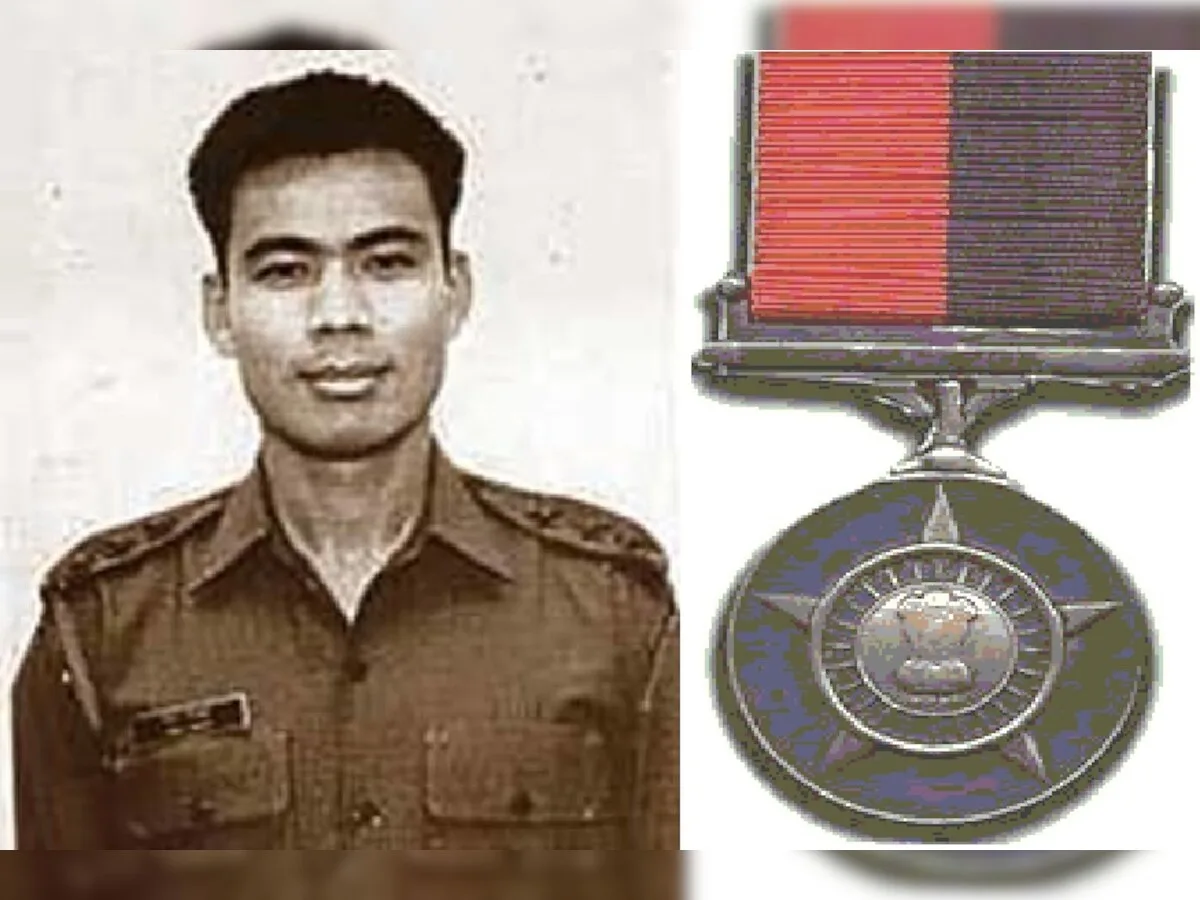
If the revolutionaries fought for our freedom, then there are also millions of defence personnel working hard day and night to protect that freedom. So we cannot also ignore the Ahoms who today fight for India's sovereignty under the banner of Indian Army, Soldiers such as Captain Jintu Gogoi, who was martyred in the Kargil War in 1999, represent a later generation that defended India's territorial integrity with the same courage with which earlier generations had resisted foreign rule.
Captain Jintu Gogoi bravely fought for India's Sovereignty in the Kargil War losing his life but killing two soldiers in close-combat before succumbing to machine gun fire
The struggle had therefore come full circle: those who once fought to free Assam from colonial control were followed by those who, in an independent India, stood to defend the sovereignty of the country to which Assam now belonged. Remembering this history is not merely about celebrating the past; it is about recognizing a long tradition of courage in which the defence of homeland and sovereignty continued to take new forms across generations.
We as people should never forget the blood of the Revolutionaries and Freedom Fighters and make sure their sacrifices were not in vain.

 Learn Ahom