
Articles

The Origin of Kati Bihu: A Tai-Kadai Festival Rooted in Rice Cultivation

Many people don't know this but unlike the other Bihus, Kati Bihu has origins in Dai Ahom culture related to worship of the Rice Goddess

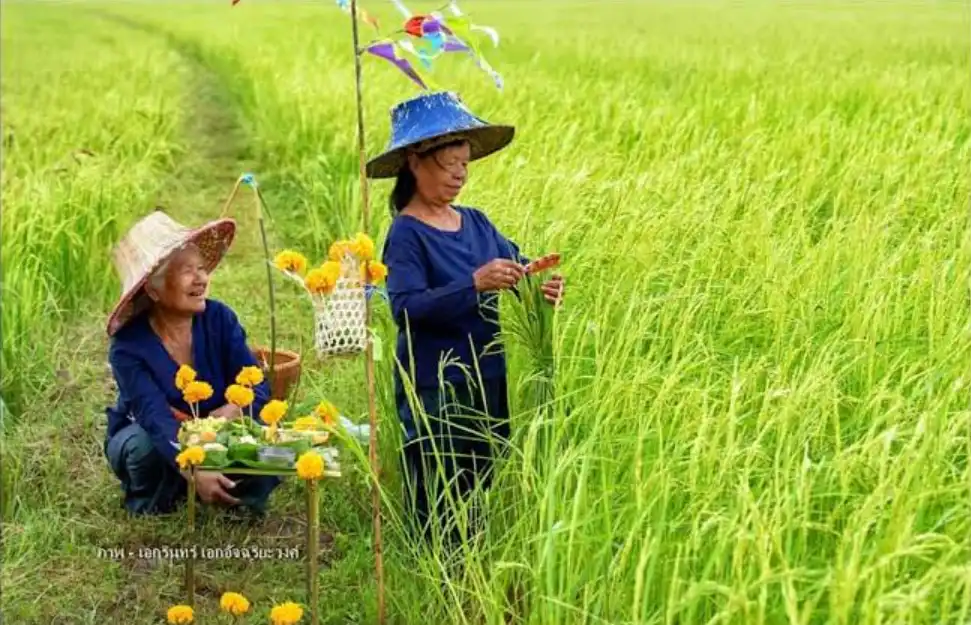
Thai women making preparations for Rap Khwan Khao Ceremony
Sai Laed • 2026-10-18 • General

When Ahoms came to Assam in Early 13th Century, they not just brought their language but also their craft and technology. And wet-rice cultivation was just one of those advanced agricultural technology brought by Ahoms. Along with that, they also brought their rituals related to rice worship.

In October, as Kati Bihu is celebrated in Assam, Thailand observes Tham Khwan Khao, a traditional rice ritual associated with honouring the spirit of rice and the rice goddess Mae Phosop.

Across the Tai-Kadai cultural world, rice has long been central to agriculture, community life, and spiritual traditions. From Assam to the Thailand, rituals surrounding rice reveal a shared recognition of common Tai animist traditions and a civilization's dependence on the harvest.

The Ahom name of Kati Bihu is râp xawn xāo or literally receiving rice spirits which is also the Thai word for it รับขวัญข้าว for welcoming rice spirits ceremony.

Akash Banti and the Tai-Kadai Connection

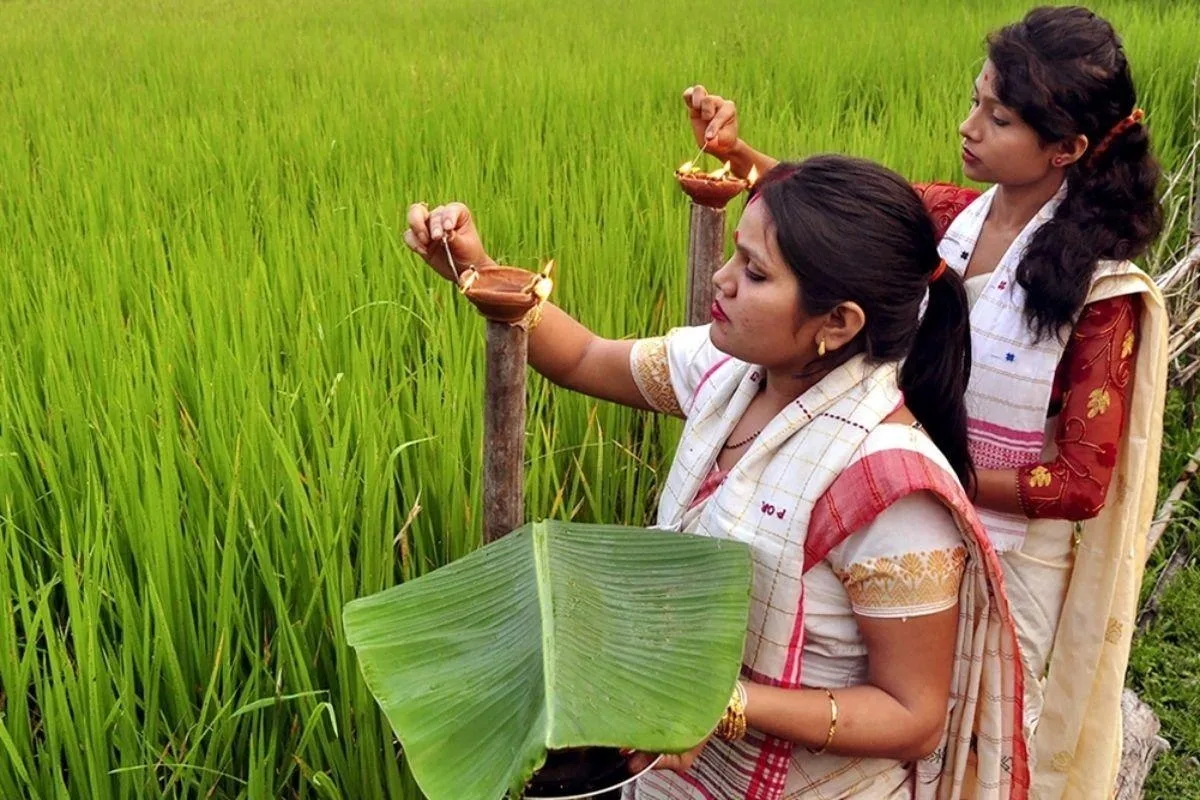
During Kati Bihu, Assamese farmers light Akash Banti (sky lamps), placing them high on bamboo poles to pray for the protection of their crops and a better harvest. This practice bears a striking resemblance to rice-related ceremonies in Thailand, such as Tham Khwan Khao and Het Khwan Khao, which honour the spirit of rice and its role in sustaining life. These similarities raise the possibility of a deeper connection between Assamese agricultural traditions and the wider Tai-Kadai cultural world.

The Sky Lights as shown in the film Joymoti (2008) and used during Kati Bihu

The use of Akash Banti may preserve elements of older Tai-Ahom traditions that gradually became part of Assamese culture. This lends support to the view that Kati Bihu may have developed from traditions practised by the Ahoms before evolving into a festival celebrated across Assam. Its historical presence and regional distribution, particularly the claim that it was less prevalent in Lower Assam, could offer further clues to its origins. While these connections require more historical evidence, they provide an interesting perspective on the influence of Tai-Ahom heritage on Assam’s agricultural festivals

Similarities between traditional Ahom Lamps and Lanna Lamps

It is believed that the light of Akash Banti helps guide ancestral spirits, a concept that also invites comparison with traditional Tai sky lanterns known as Púng Fái. The Tai peoples have a long tradition of bamboo craftsmanship, creating intricate geometric structures and decorative forms from this versatile material. The similarities in materials, design, and spiritual symbolism lend support to the theory that these bamboo light traditions may have roots in Tai-Ahom culture, although further historical evidence is needed to establish an exclusive Ahom origin.

Bamboo Lamps placed on Trees in Assam and Xishuangbanna

The Rice Goddess: Ya Huan Hao and the Origins of Kati Bihu

One theory connects the origins of Kati Bihu with the worship of the Tai rice goddess Ya Huan Hao, a name understood as “Grandmother of the Rice Spirits” in some Tai traditions. In Thai culture, a comparable figure is known as Mae Phosop, the goddess who embodies the spirit of rice. Both traditions reflect the deep reverence rice has held among Tai and Southeast Asian farming communities for generations.

According to a traditional story, the rice goddess became saddened when people devoted themselves to worshipping the Buddha but neglected the rice that sustained their lives. Rice-honouring ceremonies, known as Het Khwan Khao or Tham Khwan Khao in different contexts, are associated with this wider cultural tradition and are observed in parts of mainland Southeast Asia.

These parallels raise an intriguing possibility: could the lamps, prayers for a good harvest, and agricultural rituals of Kati Bihu preserve elements of an older Tai-Ahom tradition centred on the rice goddess? While a direct historical link remains to be established, the similarities offer a fascinating avenue for exploring the shared cultural heritage of rice-growing communities across the Tai world.
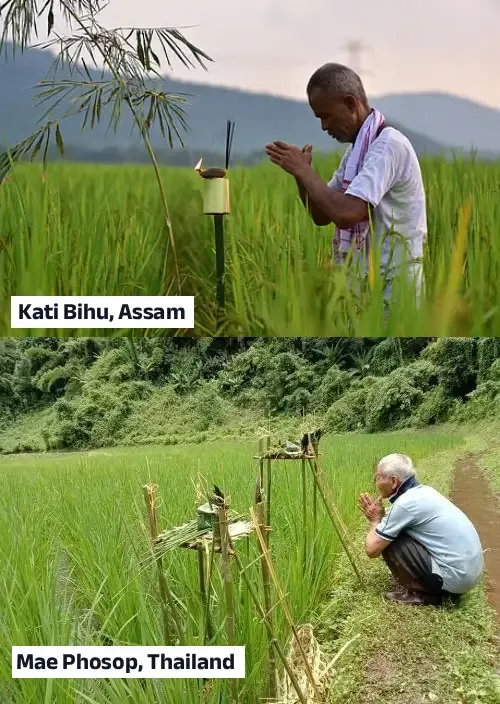
The deity of worship my have changed but the method of worship remains the same

Kongali Bihu: The Memory of Scarcity

The very name Kongali Bihu reflects scarcity, hardship, and the absence of abundance. Celebrated during a period when granaries are running low and the paddy crop is still growing in the fields, the festival stands apart from the joy and feasting associated with other Bihus. In fact the word Bihu is completely post-revisionist term for this festival as we will later learn. Interestingly, this atmosphere of scarcity echoes a recurring Tai folktale in which the rice goddess or rice spirits withdraw from humanity, leaving people to suffer hunger after neglecting the very source of their sustenance

From this perspective, the austere character of Kati Bihu may preserve echoes of an older rice-centred belief system in which the presence of rice spirits was closely tied to prosperity and their absence to hunger. How the Tai-Ahoms' traditional rice-spirit beliefs may have evolved alongside practices such as the worship of the Tulsi plant is a separate historical question, but the parallels between the festival's defining theme of scarcity and Tai rice-origin folklore are certainly worth exploring.

If Bihu Is Kachari, How Can Kati Bihu Be Ahom?

The question often arises: if the word Bihu has Kachari or Bodo-Garo connections, how can Kati Bihu be considered of Ahom origin? The answer lies in distinguishing the name of a festival from its historical roots.

The Bihu as we know comes from the Jimochayan (Deori) word Bisu, a word that literally means 'excessive joy' in Bodo-Garo language family. However, Kati Bihu, also known as Kongali Bihu, has a distinctly different character from the more celebratory Rongali Bihu. It is marked by restraint, prayers for crops, and the lighting of lamps during a lean period in the agricultural cycle.

The word Bihu eventually became a broad synonym for festival itself. For example, Sangken, the traditional water festival celebrated by Tai communities, is sometimes popularly referred to as Pani Bihu.

This illustrates how the term has been extended to festivals with different histories and cultural backgrounds. Therefore, the presence of the word Bihu alone cannot establish the origin of Kati Bihu as a Kachari tradition. We have to look at evidence and evidence points it was Ahom in origin, because of wet rice cultivation and bamboo lights associated with the festival both were brought by Ahoms.

The Kati Bihu of Assamese people have its origins in the Tai-Kadai Rice-Spirit worshipping tradition

References

  • Qu, Yongxian (2024). “The Narrative of Rice Origin in the Creation Epics: Evolution of Rice Origin Narratives Under the Influence of Theravada Buddhism.” Epic Studies, No. 2, pp. 19–37. Read article (PDF)
  • Thongmeethip, Kitisak, and Nathitakarn Phayakka (2021). “Tham Khwan Khao Ritual and the Change of Agricultural Practice.” Read article
  • Yoo-In, Nammon (2011). “Persistence of the Ritual of Calling the Khwan of the Rice Goddess in Don Pho Village.” Manusya: Journal of Humanities, 14(19). Read article
  • Khumhom, Witoon (2022). “Mae Phosop: Legends, Beliefs and Rituals in the Changing Way of Life of Phetchaburi Farmers.” Read article
  • Kongchim, Channarong (2023). “Rice Culture and Customs of Southern Thailand.” The Golden Teak. Read article
  • Saenkattiyarat, Suwat (2021). “The Goddess of Rice: A Meaningful Artwork for Will and Hope of Thai Agriculturists.” Journal of Fine Arts, Chiang Mai University. Read article
  • Photiracha, Aksorn. “Analysis of Mae Phosop Worship Rituals: Beliefs and Existence in Modern Agricultural Society.” Read article
  • Sai Laed

    About the Author

    Sai Laed

    Follows Taoism

    View all articles →