 Learn Ahom
A background on Dai religous beliefs
Dai people are originally animists believing in super-natural spirits (phi - ᥚᥤᥴ). Although these spirits
can be both benevolent (phi li - ᥚᥤᥴᥘᥤᥴ) as well as fiendish (phi hâai - ᥚᥤᥴᥞᥣᥭᥳ), the Tais believe that guardian spirits have a huge
impact on our day to day live.
And each spirit has a special bias to the spectrum it is associated with. Village guardian spirit cares only about the village
it is guarding. Water spirits care only about water, forest spirits care only about forests and one's ancestral
spirits care only about their own mortal descendants and guiding them towards true path.
Tai animist philosphy explains natural disasters like tsunami, earthquake, etc are through supernatural spirit medium.
Landslides and floods are explained as the angst of land and water spirits, to reply to human provoking or maintain
balance in nature. Success and failure of a human being are also explained as the working of ancestral spirits being benevolent
or evil to the mortals.
Diffusion with Hindu Paganist Beliefs
Dai people originally didn't have Gods. They come from contact with Indian religion missionaries such as the
Buddhist Goddess Tara or Hindu God Indra. The Brahmins, in particular, created an entirely separate lineage of
Ahom Kings dissolving their Tai roots and instead showing them as descendant of Hindu God Indira with 'lowly' Shyama (Shan) woman
whom they called as Shudra or lowest of the low in their horrible caste system.
The Ahom Kings saw in Brahmins, a tool to expand their empire and the Brahmins, saw in Ahom Kings, a tool to expand their religion.
The Ahom priests however realized the inherent dangers of such adventurism but afraid of saying anything directly,
which would lead to their own necks being cut, they slyly invented an “Ahom” of “Dai” version of such Hindu Gods. This was
an attempt to resist Aryanisation not promote it but there can be no doubt that these “gods” even today
have strong parallel to the Hindu paganist gods like Indra, Saraswati, etc.
The Ahom Kings saw in Brahmins, a tool to expand their empire and the Brahmins, saw in Ahom Kings, a tool to expand their religion.
Meaning of some Ahom Religion Terms
It is very important to note that there is actually no native word for religion in Tai. There are two words — phàsà and sàsnà both of which are from Pali/Sanskrit. So we use approximations like bâan pʰǐi (บ้านผี) or the spirit house which actually refers to the temple for spirits and not the religion itself (because the animist Tai religion doesn't actually have a name). Shan people call it sàsnà phi - သႃႇသၼႃႇၽီ or literally the religion of spirits. Ahom Revivalists call it phrálung - 𑜇𑜞𑜡: 𑜎𑜤𑜂𑜫 which originally was the name of ritual / manuscript but literally translates to the great creator, same as the word Sanamahi referring to the creator God in Meitei religion. So understanding these words in detail might perhaps help us lot in understanding the historical Ahom religion.
| Ahom | Roman | Meaning | |
|---|---|---|---|
 |
Sfa# lu[q | Phralung | lit. great god (a term used for Ahom Religion by Neo-Revivalists) |
|
B,nq@ fI | Banphi | lit. hamlet of spirits (a term used for Native Tai Religion in SEA) |
|
xunq fI | Khunphi | god/male spiritual being lit. prince of spirits |
|
n,[q# fI | Nangphi | goddess/female spiritual being lit. lady of spirits |
|
mE[q# fI | Merngphi | heaven/country of spirits |
|
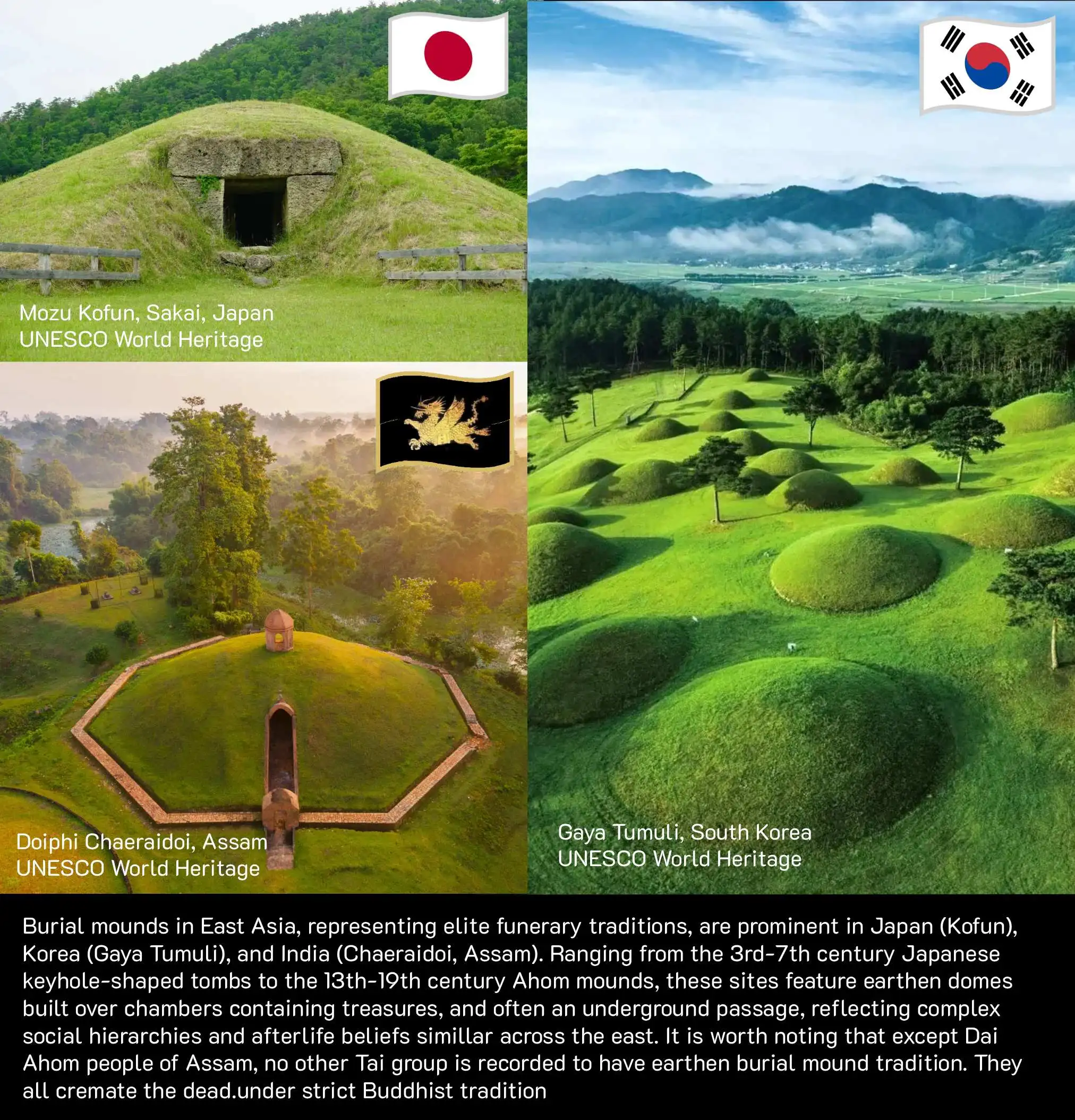
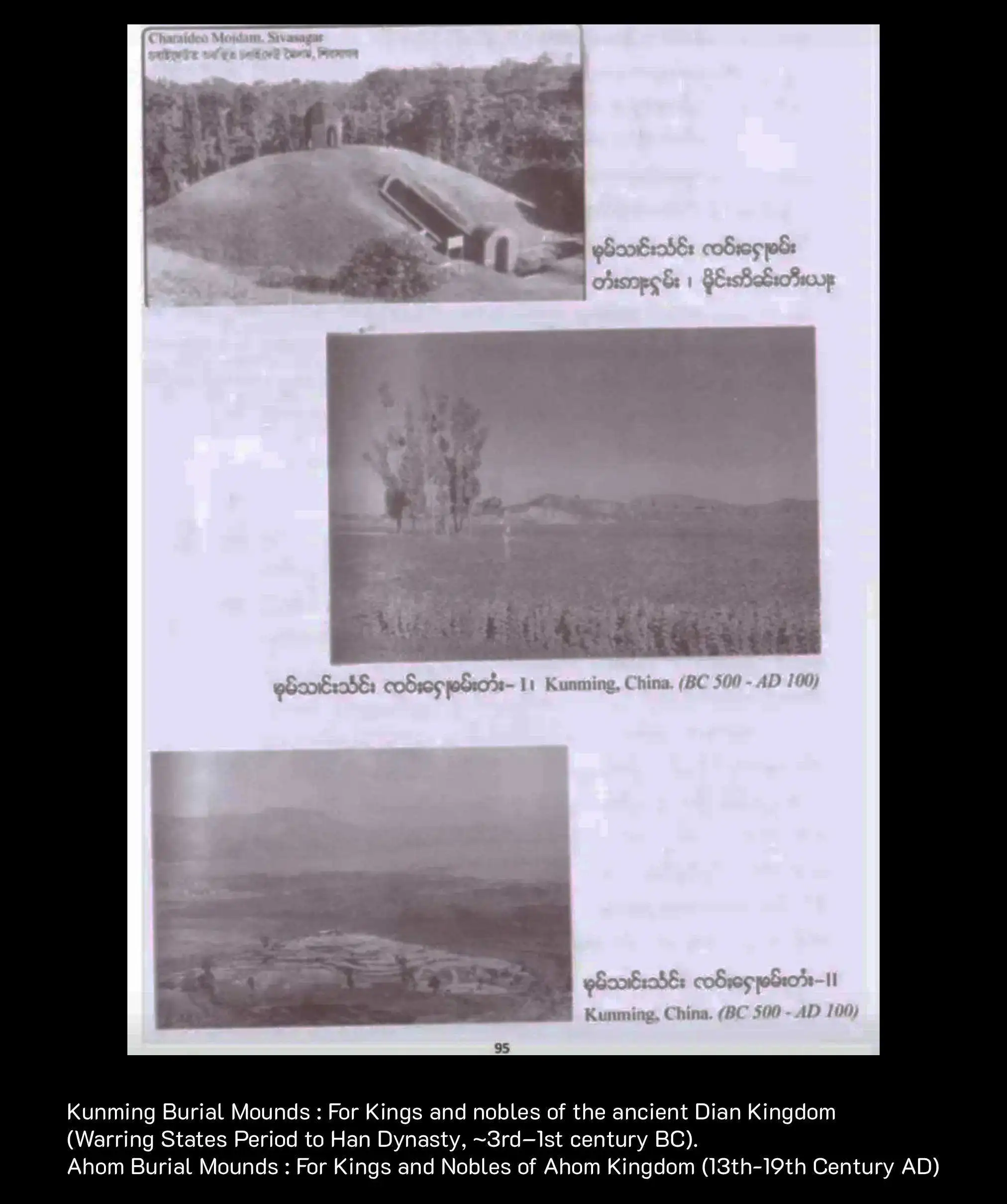
doj fI | Doiphi | so-called “moidam” lit. spirit mountain |
|
sUnq fI | Sonphi | cemetery lit. spirit garden |
|
eha fI | Hawphi | temple lit. spirit palace |
|
lV[q# donq | Lengdon | white light (my interpretation) |
|
[I#[w@xmq# | Ngingaokham | Deer of Golden Shade (ngi=deer) |
|
ynq! s,j hu[q | Yansaihung | God of Natural Powers (lit. spread-ray-dawn) |
|
A,j@ lV[q# dinq | Ai Laeng Din | Guardian Spirit of Land (lit. light of earth) |
|
cw$fIdmq@ | Tsao Phi Dam | Family Guardian Spirit (lit. spirit of dead) |
|
cw$fIm,nq@ | Tsao Phi Man (or Ban) | Village Guardian Spirit (lit. spirit of village) |
|
fa$tEw$cE[q@ | Phatertserng (NOT PhatuChing) | Creator God (lit. heaven-touch-state) |
|
ya@sV[qfa# | Yasengfa (NOT Jasingfa) | Goddess of Culture/etc (lit. grandmother-jewel-heaven) |