 Learn Ahom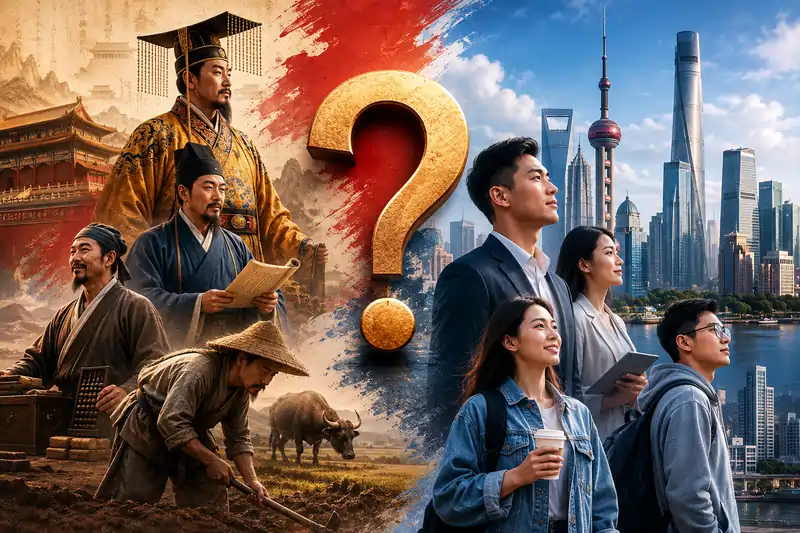
Recently, especially on Indian social media, claims that "China also has a caste system" have become increasingly common. From instagram posts and reels, it appears the Indians are fed up with unfair criticism of India as the mother of Caste System, so they are now resisting by drawing parallels to Social Stratification in Ancient China and elsewhere. But this article will prove why such a childish whataboutery is downright daft and why the institution of 'caste' is explicitly unique only to India.
What Indian Internet Says
To begin this article with a bit of familiarity and context for the reader, the Indian Internet has recently found a new scapegoat to counter the increasing hate against India. And this scapegoat is China. To relativize its own criticism of caste hierarchy many Indian social media users are concocting false stories about Chinese Caste System. One particular tweet that caught my attention was where an Indian social media user says China banned Shang Chi, because "Shang" is a low-caste surname and "Chi" is a high-caste surname. It cannot get more funny than that this.
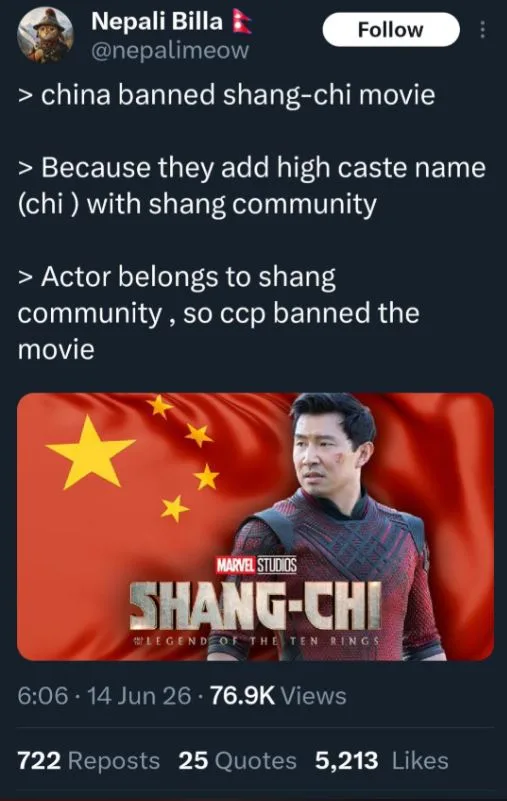
There are lot of other memes and since India is 100 years behind China, we can understand the need of some people to create their own happiness here. But some people have also started changing history by making statements like 'Chinese Caste System is much worse than Indian Caste System and they don't even give reservation'. Both these statements are incorrect !
China has Reservation but not Caste !
Unlike what the meritdharis want you to believe, China does have reservation but it is not based on caste because China doesn't even have caste. Instead this reservation is given to all minority or non-Han ethnic groups such as Dai, Zhuang, Uyghur, Tibetan, etc who collectively make up around 7.2% of China's population. And China gives them 15% reservation under its affirmative policy of Yōuhuì zhèngcè 优惠政策.
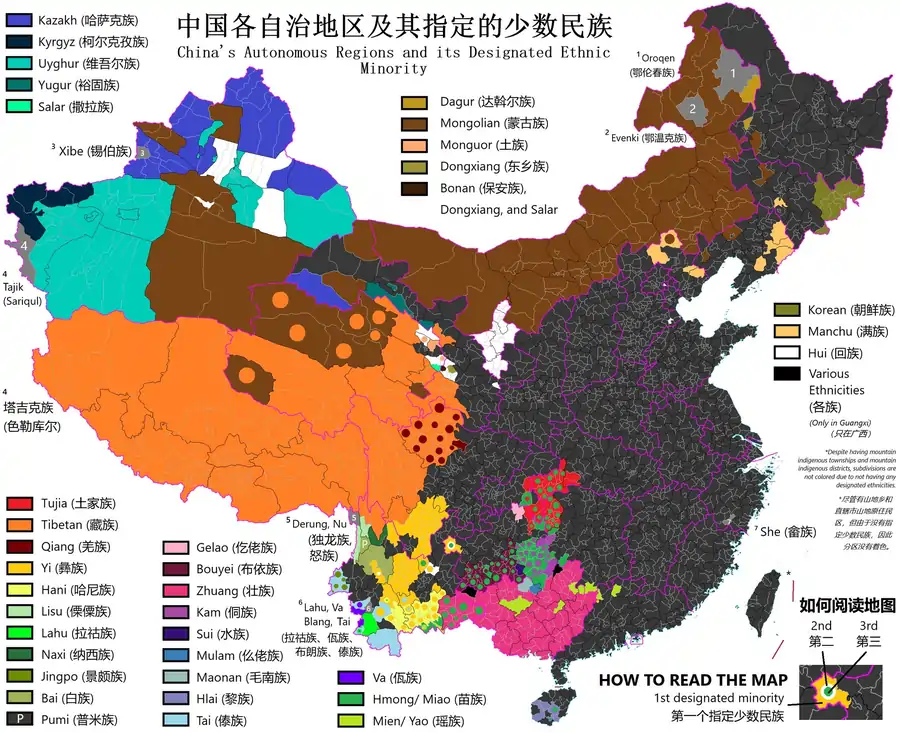
So 7.5% ethnic minorities are getting 15% reservation in China ! You can compare that to India where 8.2% Scheduled Tribes get flat 7.5% reservation, lower than their percentage share while 25-30% General Caste population compete under 60% open/unreserved category, more than twice their proportion to population. and still whine all day in social media how the affirmation policy is so discriminative against them. And since India is such a religous society, the actual Indian equivalent of Yōuhuì zhèngcè would be giving reservation to all non-Hindus but instead here non-hindus are constantly threatened to be stripped off all government benefits and forced to convert to Hinduism or chant Jai Shri Ram. Such socio-political dynamics simply doesn't exist in China
Indian Caste System
Now before we talk about 'caste system' anywhere we first need to talk about the country which is known as the mother of Caste System, Untouchability, Sati, Devadasi, Female Infanticide, Dowry and the worst kind of social ills known to humanity.
Caste System is not merely social stratification but decides how a person will be treated right since his birth. In many parts of Rural India, even the shadow of an outcaste is considered polluting and we regularly hear news of dalit lynched to death just for eating food infront of upper castes, or for keeping beard, or riding a horse, or even wearing shoes, or even trying to get education.
In other words, Indian Caste System is the extra-judicial body that decides who you can marry, who you can eat with, how much wealth you can own and what occupations you can take. Sociologists generally define caste as a system characterized by hereditary membership, restrictions on marriage, occupational inheritance, social closure, and notions of purity and pollution. The Indian caste system is perhaps the most extensively studied example of such an institution (Goghari & Kusi, 2023).
One most important thing which many people overlook is that, caste system is not simply a class system. Economic mobility does not necessarily erase caste identity, and affluent individuals from historically disadvantaged groups may still encounter caste-based discrimination. Dr. BR Ambedkar wasn't suddenly respected in society because he married a Brahmin wife, or got education from abroad. Even being the top 1% didn't help him get respect in society. So when caste Hindus whine about why rich dalits get reservation, the answer is that they are not getting reservation because of their economic disability but because of their caste disability. A poor dalit and a poor Brahmin are treated very differently and same goes for a rich Dalit versus a rich Rajput. A Upper Caste Hindu would rather marry his daughter to a working-class white man (and also beef eater) rather than a rich dalit man. Such kind of divide doesn't exist in China. No Chinese person, be it Chinese Muslim or any Ethnic Minority would ever consider marrying a foreigner over his own nation people. The sentiment of nationalism simply supercedes any other sentiment in China.
Chinese Communism
When I was very young, I heard a lower-working class labourer say to me, "rozar putek rozae hobo dukhiar putek dukhia e hobo" or a rich person's child will be rich and poor person's child will always be poor, which tickled me very wrong way. I recently watched the 1960 film, Third-Sister Liu and the entire theme of the movie, much like Chiinese Communism, is about Class Opposition. For instance, , Liu Sanjie insults landlord Mo by singing:
He does not plant the sesame but drinks its oil. He does not tend the mulberry but wears silk He quenches his thirst on the blood and sweat of the poor He is the bandit chief... The landlord’s heart is more poisonous than a snake The fishes in the pond die if he washes his hands in it The trees on the hill wilt when he passes by..
So it is really funny when I see some Indian caste fundamentalist play the shift-blame game or whatboutery game with People's Republic of China, whose entire constitution is built on class opposition. But some people might still wonder maybe Modern China opposes of class but what about ancient China during the age of Kings and Queens? What sort of hierarchy did China have then? This brings us to history between the two civilizations
Ancient China vs Ancient India
Rice, Paper, Gunpowder, Crossbows, Compass - these are all Chinese inventions which drastically changed the world but India never invented anything revolutionary. Even sugar crystallization which is credited to Indians was ultimately refined and re-imported back to India over 1000 years later as chini (which is also the Hindi word for Chinese people). I am very irritated whenever someone speaks about India and China in the same breath because India is just an early Iron Age civilization while China is true ancient Civilization that has existed more or less in the same form since the Yellow River Civilization which itself was over one thousand years older than the IVC.
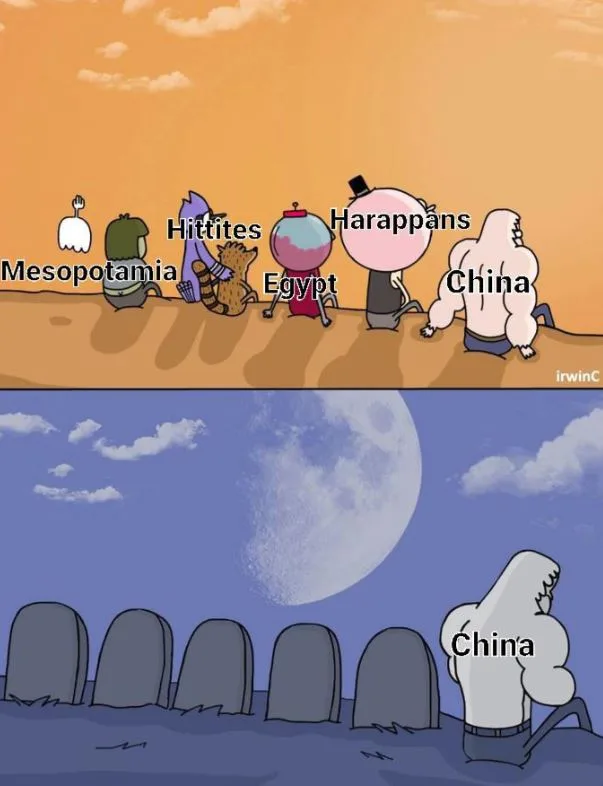
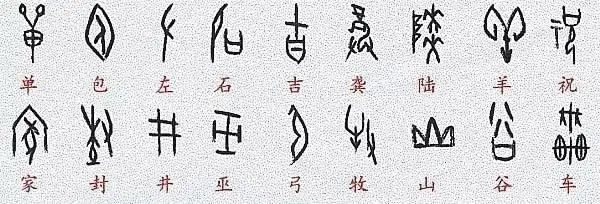
And to-remind you that not a single Indian language, neither Indo-Aryan nor Dravidian has been found to have any connection to the IVC language whereas the Chinese logographic script itself shows the ancient origins of their civilization. In other words China is the only true ancient Civilization that is still alive today.
Further more when India was busy burning the tongues of lower castes for secretly hearing Vedas, China was conducting the Imperial Civil Services Examination which was also world's first government exam started in 605 CE, that allowed anyone of any class any birth, to work in the top brass of Chinese Imperial Bureaucracy as scholars. Were scholars considered the highest in Chinese Shi-Nong-Gong-Shang system? Yes but it wasn't hereditary. Rather you had to give exam to join the Bureaucracy (Jiang, Bai, Zhao & Xiong, 2022).
The Hukou System
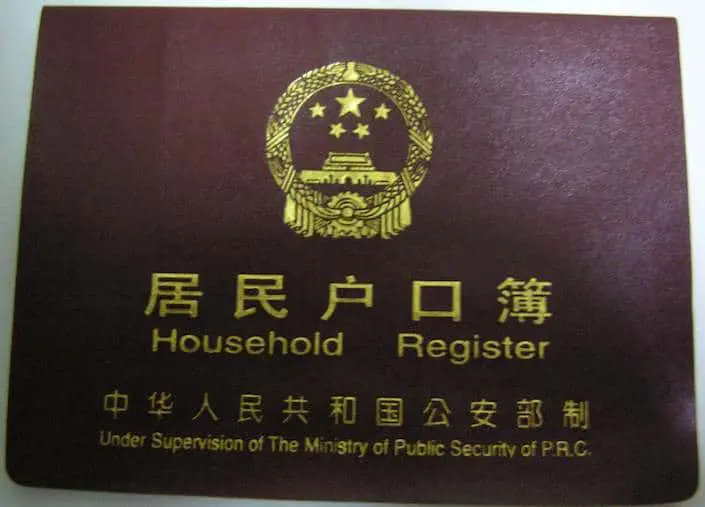
I will be extremely biased to PRC if I do not mention the hukou system (literally household registration). While it is true that rural residents are at an extreme disadvantage because of the system and face institutional barriers that restricted access to education, healthcare, employment, and migration opportunities. And it is also true that several scholars have described this arrangement as "caste-like" because it created inherited status distinctions between rural and urban populations (Potter & Potter, 2009), but the core problem that Hukou system tries to solve is one of internal migration. In case of Assam, only three towns had more than 50,000 population in 1960. Today many of them have 6-7 times the population in just 6-7 decades, particularly the town of Tinsukia which show a six-fold increase from 28K to 188K between 1961 and 2011. Hukou System tries to solve exactly this problem by marking a person to his birth location and although this does put the rural populations at an disadvantage but one can argue that in the long run it only helps in all-round development as looking for better opportunities outside you often ignore your own birthplace. In India's case many Biharis think they can just migrate outside and that will solve all issues. But with a system like Hukou it forces the provincial leadership of Bihar to solve their own issues and migration is in-which-case, only a temporary relief not a permanent solution.
Yet even these scholars generally stop short of calling China a caste society. And the term "caste-like" highlights similarities in social closure rather than equivalence. And in-fact such "caste-like" features can be seen everywhere in modern society. Certain opportunities are closed to you because of your immediate belonging (non-citizen, non-local, non-tribal, non-urban etc) which do appear unfair but this pseudo caste system cannot even be compared to the actual caste system that exists in India. The daily lynchings we read in our newspapers where dalits are killed just for drinking water from a public well and just few days old news I read on scroll where a dalit man was killed just because he refused to massage feet of his colleagues. I would wish the China experts from India could show me a single news like this anywhere in China. Because it doesn't even exists. The Chinese don't have caste and the Dai Ahom people who came from China also don't have caste.
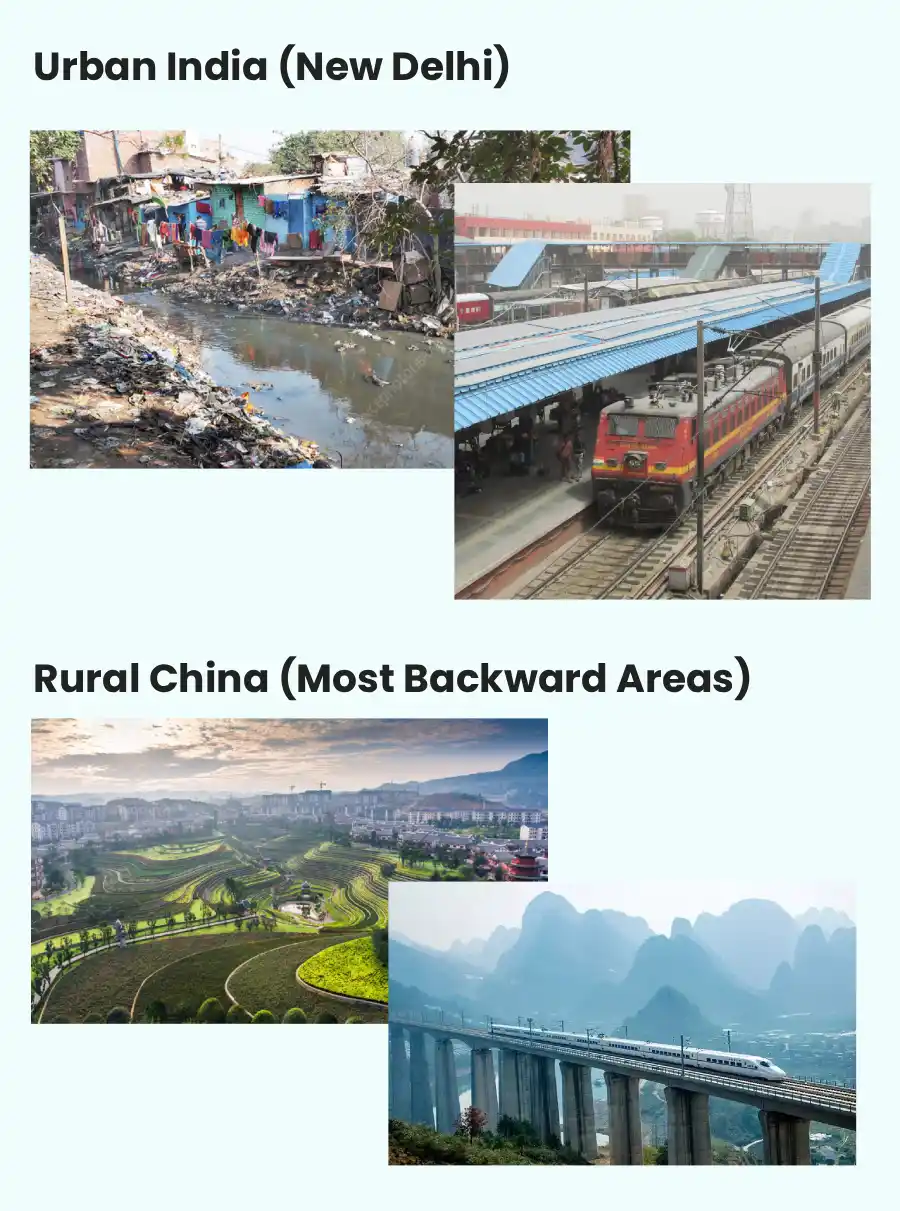
Only those who live in India have caste, and it is most central to the Hindu religion not any other religion as BR Ambedkar said 'to be a Hindu means to have caste.' So blaming on other countries won't work. It is high time the Upper Castes acknowledge their historic wrongs, and the lower castes stop following them like sheep, and carve their own path, one that is free from discrimination and where equality doesn't come with any strings attached.
Further Reading
- Goghari, Vina M. & Kusi, Mavis K. An Introduction to the Basic Elements of the Caste System of India. Frontiers in Psychology, 2023.
- Gupta, Pallavi & Kothe, Satyanarayan. Interpreting the Caste-Based Earning Gaps in the Indian Labour Market, 2021.
- Vaidehi, R., Reddy, A.B. & Banerjee, S. Explaining Caste-Based Digital Divide in India, 2021.
- Wu, Xiaogang & Treiman, Donald. The Household Registration System and Social Stratification in China: 1955–1996. Demography, 2004.
- Li, Lulu, Yang Xiao & Wang Fengyu. The Structure of Social Stratification and the Modernisation Process in Contemporary China. International Sociology, 1991.
- Hung, Jason. Hukou System Influencing the Structural, Institutional Inequalities in China. Social Sciences, 2022.
- Potter, Sulamith H. & Potter, Jack M. A Caste-Like System of Social Stratification: The Position of Peasants in Modern China's Social Order, 2009.