
 Learn Ahom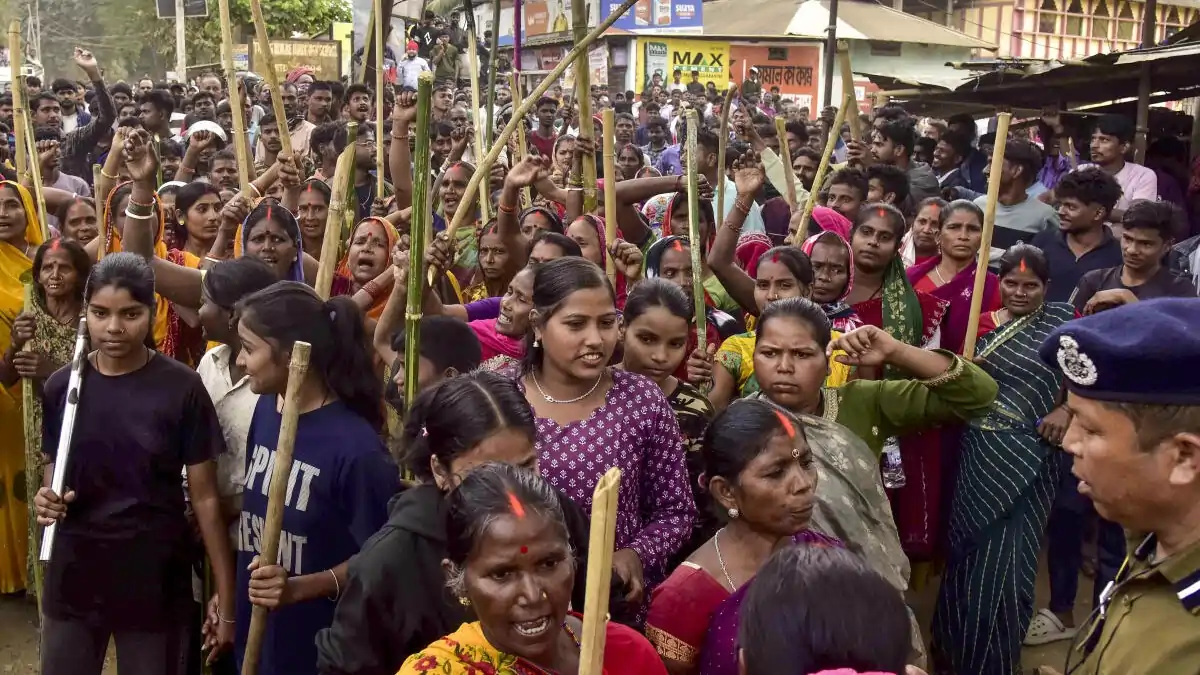
Many would not write about this but some constituencies in Karbi Anglong have become areas that have been turned into different kind of militancy. There is an imminent threat of Bongo Sena, a Hindu Bengali insurgent force, allegedly trained by Indian agencies, that has been demanding a separate Bengali state comprising of parts of sixth scheduled or tribal areas in older Cachar and the present day Karbi Anglong. Sections of RSS in Assam as well as Barak support Bongo Sena, who are actively pushing out indigenous tribal people from places like Bokajan and Howraghat. During the movement against Assam Government's illegal bid to take over 18000 Bighas of tribal land for solar power in 2024, Karbi elders from Bokajan constituency pointed out to a counter protest in Bokajan where a few non-Karbi/non-tribal traders took out marches in support of the Solar power plant. He told me that many of these counter protestors were members of Bongo Sena, who also work with local BJP units and are largely anti-Karbi.
A total of 7184 acres in Karbi Anglong's Professional and Village Grazing Reserve have been encroached by non-Karbi particularly from Bihar and Bengal. The demand for eviction is directly connected to the inclusion of non-Karbi in the electoral rolls. While for rest of India, SIR was used to delete voters from the electoral rolls, many in Assam fear that the ongoing special revision of voter rolls, barely three months before elections, was aimed at adding more voters to the electoral rolls. Election Commissioner for Assam, Anuraag Goel made it absolutely perspicuous that people who have recently migrated to Assam could transfer their vote to the state. That includes even those who are staying in scheduled areas.
Even at the conceptual stage, this moves to influence local democratic processes by an organization like Election Commission sounds banal. It goes against the constitutional promise of sixth schedule. The tragic part is that Indian state has already turned these concepts into reality. The Indian state continues to shy away from full implementation of Article 244 A to create an autonomous state of Karbi Anglong even as Gauhati High Court is yet to pronounce a verdict on the Karbi's right to prepare their own electoral rolls. It is unfortunate that only after Tuliram Ronghang's house was set on fire, we are discussing this. The design to create enmity and disturb the peace in Karbi Anglong is a long cherished dream of a section of India intelligence and business houses but the price of this had to be paid by a Karbi leader. But before I offer any sympathy to Ronghang, one must note that the CEM himself has issued death threats to many honest and hardworking Karbi. Ronghang owns vast tracts of land with tea gardens and rubber plantation across the autonomous council area. One elder told me that Karbis have not seen someone as corrupt as Tuliram in their lifetime.