

Articles

Assam and Thailand: Identity, Insecurity, and the Need for Validation

The Viral Italian BTS Incident has revealed a deep-seated inferiority complex of Thais, one that can be found in Assam too

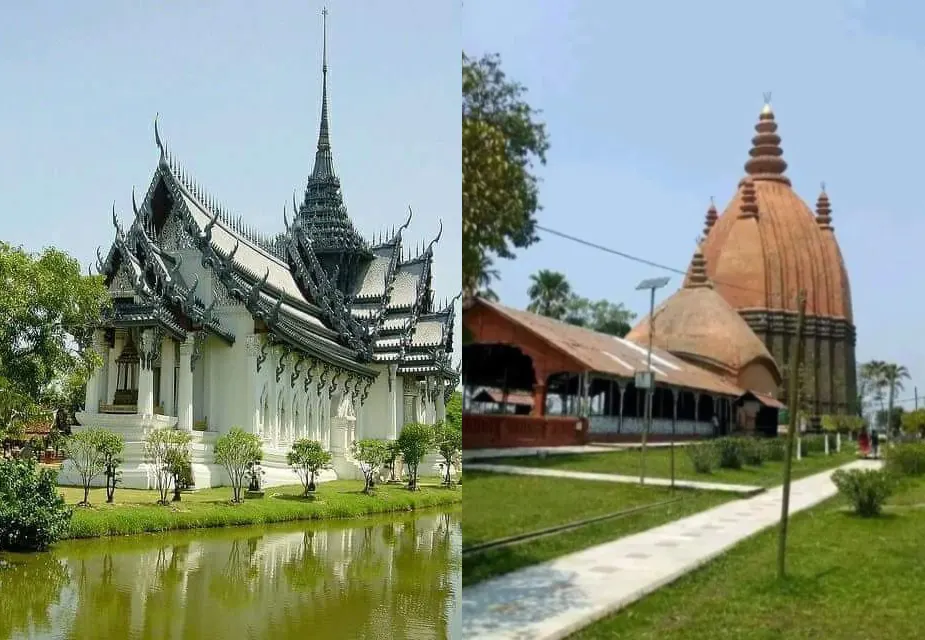
Assam and Thailand are connected by shared Tai-Kadai heritage, but also shared insecurities about their identity
Sai Laed 2026-07-31 Community

Advertisement

Aside from their common etymology in the root-word Siam, both Assam and Thailand have strong similarities in affinity for homogeneity (at the cost of minority cultures) and also a strong sense of insecurity that is often not talked about.

Every once in a while you will come across some video on Instagram about some Farang (westerner) insulting Thai people and often the incident itself is minor, but the public reaction becomes enormous. Thousands of comments appear, to defend the wounded national pride, and a single individual's behavior becomes a discussion about the dignity of an entire society.

Take for example, the recent video of viral Italian tourists making indecent gestures in BTS and making that comment about bringing money to the country. The inappropriate gestures directed at a Thai woman were indeed very offensive, but what seemed to trigger a deeper emotional response among many Thais was the remark about foreigners bringing money into the country which seemed to have injured Thai pride more than a Thai woman being insulted in public space.

Perhaps you can relate to the two but the issue clearly isn't about the woman anymore. It has now become a broader issue about the social dignity and self-esteem of all Thai people.

Collective Insecurity: When a Joke Becomes an Attack on Identity

One of the most interesting aspects of collective insecurity is that the emotional reaction is often not proportional to the actual insult. A comment that appears harmless to an outsider can deeply hurt someone when it touches an object of identity — clothing, food, language, traditions, or physical appearance.

I experienced this myself when I once joked about the pha noi (traditional lungi) worn by the Man Tai people of Assam. I compared it casually with the lungi worn by Bengalis, treating it as a harmless joke between friends. My intention was not to insult the Man Tai community, but the girl I was speaking to became extremely upset and eventually started crying because she felt I was insulting her tribe.

And from then on I never joked about anything related to Man Tai (the tai-speaking tribes of Assam) but what is the reason behind this? In Nagaland, people were recently irked by a show called Tribeverse where the contestants appeared to vomit after eating Naga food (worms, insects, etc) because to them this reaction was connected to the older stereotypes of being described by outsiders as “primitive,” “barbarian,” or “uncivilized.”

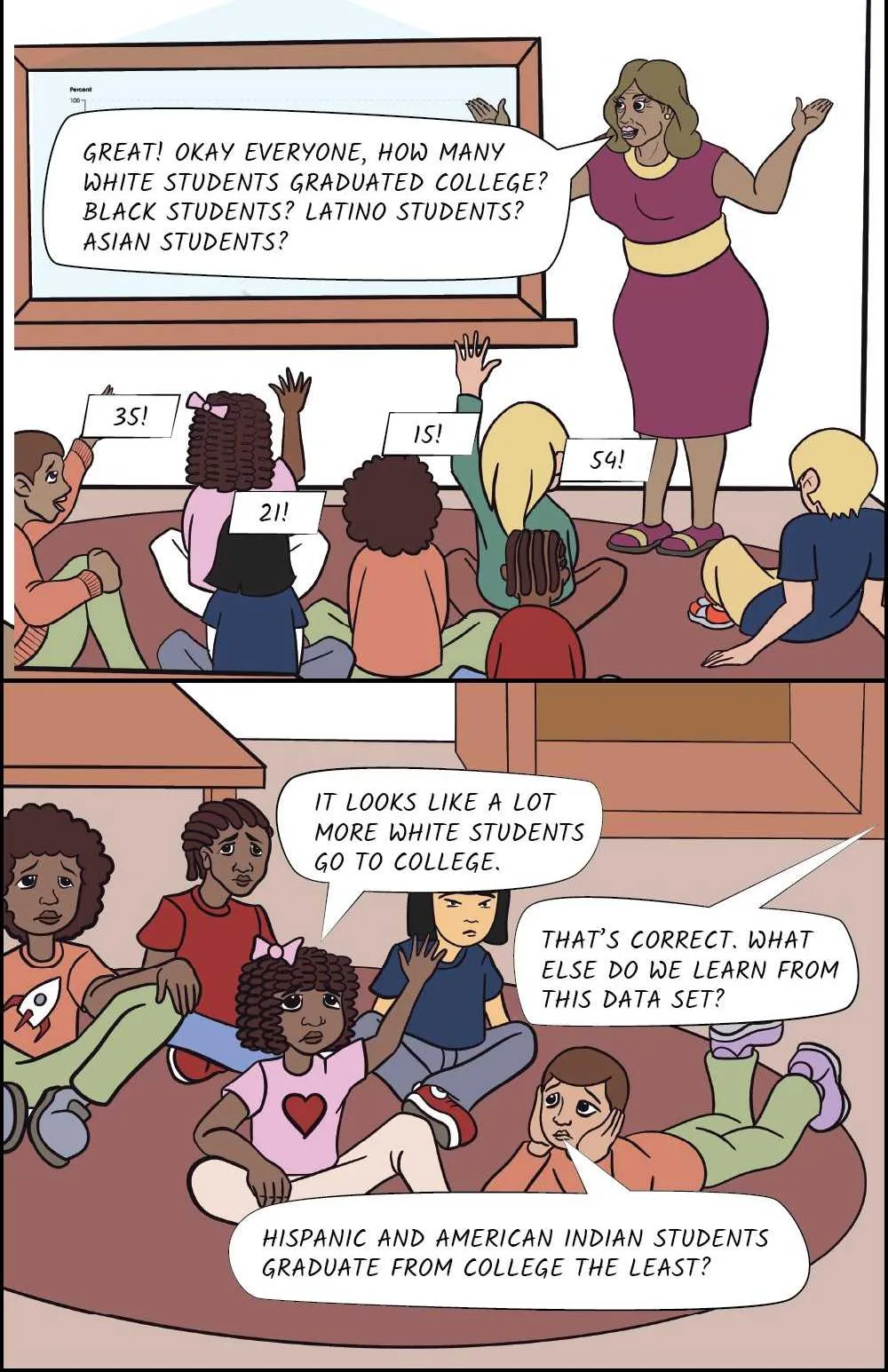
What is however more interesting is the case of 'middle-groups' such as Ahom and Thai who boast of their superiority over one group (tribals/khmers) while feeling inferiority from another group (caste hindus/farangs). This happens because human beings do not judge themselves only by their own achievements. They also compare themselves with others. Psychologists call this social comparison theory, where individuals and groups evaluate their self-worth by comparing their status with surrounding groups.
How Social Comparison works in Ethnic Groups

When a community repeatedly receives messages that another group is richer, more powerful, more technologically advanced, or more globally influential, a psychological tension can develop. Different groups deal with it in a different way. The East Asians saw a greater civilization emerging in the West and quickly levelled up whereas the people in South and South-East Asia failed to act on time, and used coping mechanisms to hide their inferiority complex with a superiority complex. The Kalars chimping out on social media about their so-called ancient civilization is the best example of this. Even though in the modern day world they can't even build their own smart phone, despite being largest in population, they still believe they should be respected because of their so-called thousand year old history.

For smaller communities this psychological tension is even more prevalent. One one hand the smaller group admires the larger group and aspires to be more organized like them, but on other hand it also resents the larger group for overshadowing its own achievements. Kuki-Meitei conflict, Dalit-Hindu conflict, and even Thai-Farang conflict points to this same phenomenon

The Love-Hate relationship between Thais and Farang

Thailand has a complicated relationship with Western foreigners, often referred to as farang. On one side, Westerners are admired for their technological advancement, higher incomes and global influence but whenever some farang behave arrogantly, a psychological tension is created even though the Thais might themselves secretly agree with everything the farang says on Thailand being too dependent on foreigners. The problem only happens when you say it out too loud.

In social media it has become like a trend. One group of Farangs especially the Israelis will mock the native Thais on how Thailand runs because of their money or how Thais should get on their hands and knees to thank them for visiting them. All the same time another group of Farangs will make videos on behalf of Thais, about the culture and seem to act even more offended than actual Thais.

The former type of Farangs make Thais on their guard while the latter type makes them more admirable making Thai-Farang relationship a very complex one. One one hand Thais clearly admires the farangs, as proven by lyrics of countless Thai songs while at the same they also feel threatened by their perceived superiority.

The fact remains that Thailand depends heavily on Tourism, more than 25% of its GDP comes directly or indirectly from the Tourism sector and the country cannot survive without it. It is also a fact that Thai students perform extremely poorly in Maths and Science and most industries in the country are run by Chinese or Farangs. The Thai people know this but they try to hide this through many different coping mechanism particularly their pride in not being colonized unlike their neighbours, which is very similar to what the Ethiopians say about themselves or what the Ahom people say about ruling Assam for "600 years".

Advertisement

Inferiority as Superiority: The Ahom Identity in Assam

Recently a video got viral by an anti-Ahom page which shows a person starts singing glories of Ahom Kingdom while distributing flood relief. While it is indeed true and without doubt that Ahoms have a remarkable history as the de-facto longest-ruling Kingdom of South Asia and ruling Assam for nearly six centuries but it didn't even occur to the person concerned that perhaps it was not the right time to discuss Ahom history, while people are hanging between life and death cause of Assam floods.

This deep-seated insecurity manifests into a dangerous superiority complex. During the ST status (V) fiasco, many Ahom accounts started abusing tribals and calling them primitive while at the same time demanding tribal status from the government. Some people even labelled existing tribals as 'privileged' while calling the Ahom community as real backward community that has been ignored by successive governments.

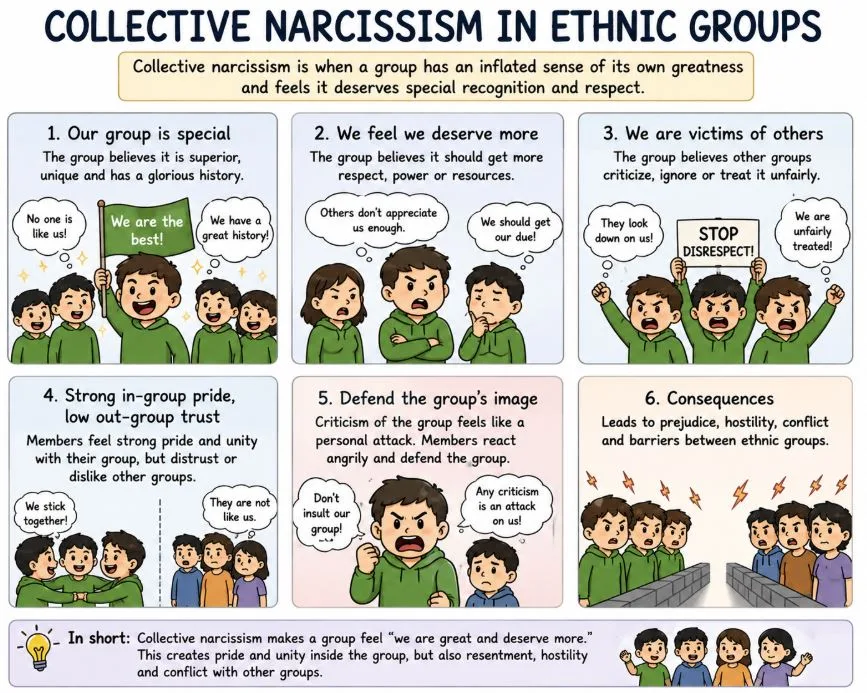
Psychologists call this phenomenon as collective narcissism — an exaggerated emotional investment in the belief that one's group deserves special recognition but does not receive enough respect. The Hindu nationalists who get irked when foreigners are more interested in visiting Taj Mahal than their ancient Hindu temples also belong to the same category. In these cases, even the lack of recognition feels like humiliation.

How Collective Narcissism works in Ethnic Groups

But this desire to seek validation is not intrinsic to Thais or Ahom people alone. Almost all tribes of Northeastern Iindia are desperate to seek validation from Mainland Indians. On one hand they feel threatened from the huge amount of Mainland Indians settling in their lands and potentially displacing them, but on the other hand they also believe they don't get enough recognition from the settlers. The Japanese people also desire validation from the outside world while still having a desire to maintain its unique history as an isolated society.

The Danger of Seeking Validation from Outsiders

While in some cases approval from outside world can be good fuel for development but a society becomes psychologically vulnerable when its self-worth depends too much on external opinions.

A Thai person does not need a European tourist to tell him that Thai culture is valuable.

And similarly an Ahom person does not need Indian Academia to confirm that Ahom history matters.

A culture's worth does not come from being admired by powerful outsiders. A culture's worth comes from its own people. The Old Ahom language became extinct not because Caste Assamese didn't recognize it but because Ahom people themselves didn't find any meaning in it and thereby adopted the language of the same Indo-Aryans who used to "work for them".

Malcolm X quote on Black Self-Reliance and Independence

Conclusion: Pride Must Come From Within

To draw similarities between Assam and Thailand, people from both regions tend to give attention to some aspects of their culture only when the foreigners appreciate them. The assertion of Lanna identity in Northern Thailand, for example is partly only due to the boom of tourist industry in Chiang Mai. Similarly lot of Thais gave attention to Lisa only when she became famous abroad.

The same thing is also in Assam, where dragging each other down appears to be the national tradition. Zubeen Garg sang thousands of songs in regional dialects but Assamese people reduce him to the "Ya-Ali singer" when introducing him to mainland Indians.

The Assam handicrafts were often associated with poor low-income households but once they became famous even the Caste Assamese started associating themselves with it, who earlier used to look down on the low-caste workers who worked in such professions.

The interest in Ahom Revivalism too is a result of external forces such as scholars like B.J. Terwiel, Stephen Morey, et al and other Tai people around the world showing interest in it. It never appeared to the Ahom mind that their language is worth reviving without this external push.

Many people ask me why they should waste their time learning Ahom language. No one ever asks why should they not learn Ahom language and moreover why do they even need a reason to learn their own language

[Advertisement- If you are interested you can just buy the e-book everything from beginner to advanced level and the fastest way to become a native/natural Tai speaker ]

So instead of weighing everything as "foreigners love this, therefore it is cool" both Assam and Thailand should weigh things as "it is cool because it belongs to us and reflects who we are, and we are happy that others love it too." The opinions of outsiders maybe important but only secondary to how the ingroup itself feels about its own culture, cuisine or identity. The gamusa is the pride of Assam not because PM Modi wears it but because it carries centuries of indigenous weaving traditions, the skill of tribal weavers, and the cultural memory of generations. Its value comes from its roots, not from the validation it receives. Its dignity comes from the looms of tribal villages of Assam, the hands of generations of weavers, and the memories stitched into every thread.

And similarly Thailand is beautiful because Thai people make it beautiful and not because of the clout or validation it receives from farangs

I hope this article was of interest to audience from both Assam and Thailand. Thanks for reading.

Advertisement

Sai Laed

About the Author

Sai Laed

Follows Taoism

View all articles →