🌟 Bestselling Guide
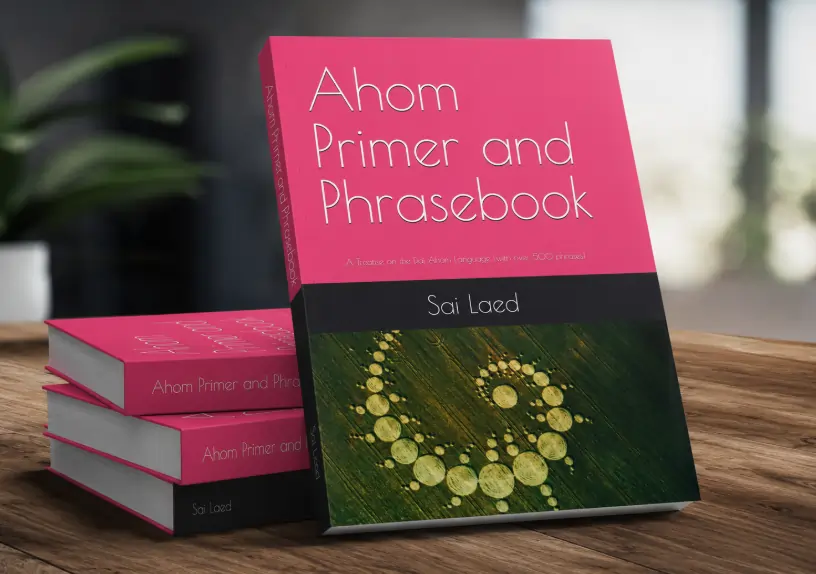
Master the Ahom Language
Get the ultimate Ahom Learning eBook. Packed with deep knowledge on context-based vocabulary, grammar rules, and thousands of examples.
📖 PDF & ePub Formats
🔖 Lifetime Access
⚡ Instant Download

 Learn Ahom
 Laeng
Laeng
2 Comments
Appendix E of Ahom Lexicons (1964) will be of interest to you, but here is my own list
- The Aw ⟨ɔ⟩ for yes - Bengali people say হ্যাঁ (hya) for yes while in Kamrupi Dialect it is অ (aw) which likely comes from Dai 𑜒𑜦𑜡; āw for affirmative yes. This separation from Standard Bengali itself suggest Dai influence
- Wait ৰ (rɔ) is same as Thai รอ - rɔ, maybe it is just shorthand of 'ruko' or 'roba' but the monosyllabic nature of this word again strongly suggest Tai influence
- নে (ne) direct interrogative is same as Dai Ahom 𑜃𑜦𑜧, - nàe, infact we use it exactly same way.. bhat khala ne vs gin xāo nàe
- The common slur kela is again directly Tai-origin for which you can refer to article on etymology of kela
Aside from this there are some Kinship terms used in Eastern Assamese Dialect which directly come from Dai language and ofc buranji/boranye as you mentioned (โบราณ/ᦷᦢᦟᦱᧃ boran meaning ancient and ᦵᦍ ye meaning barn or store - or the store of ancient things).. I will write a detailed article on it very soon𑜒𑜦𑜡 𑜁𑜡; 𑜁𑜨𑜆𑜫; 𑜋𑜩 𑜁𑜡; !