 Learn Ahom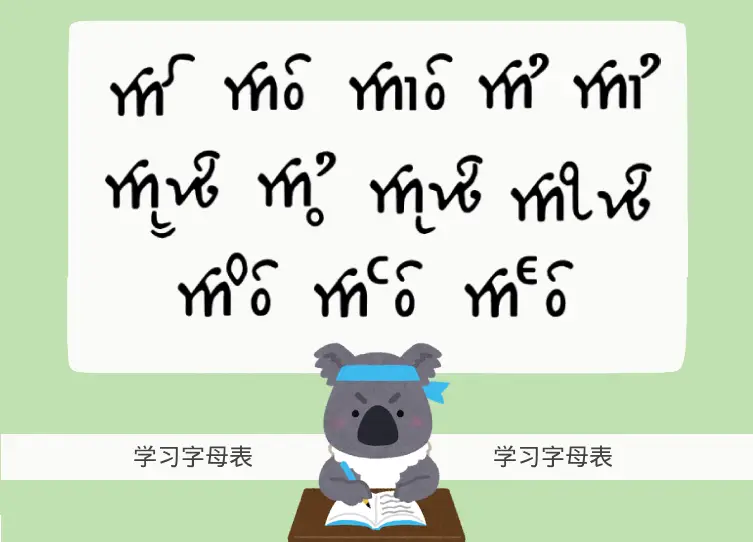
Diphthongs
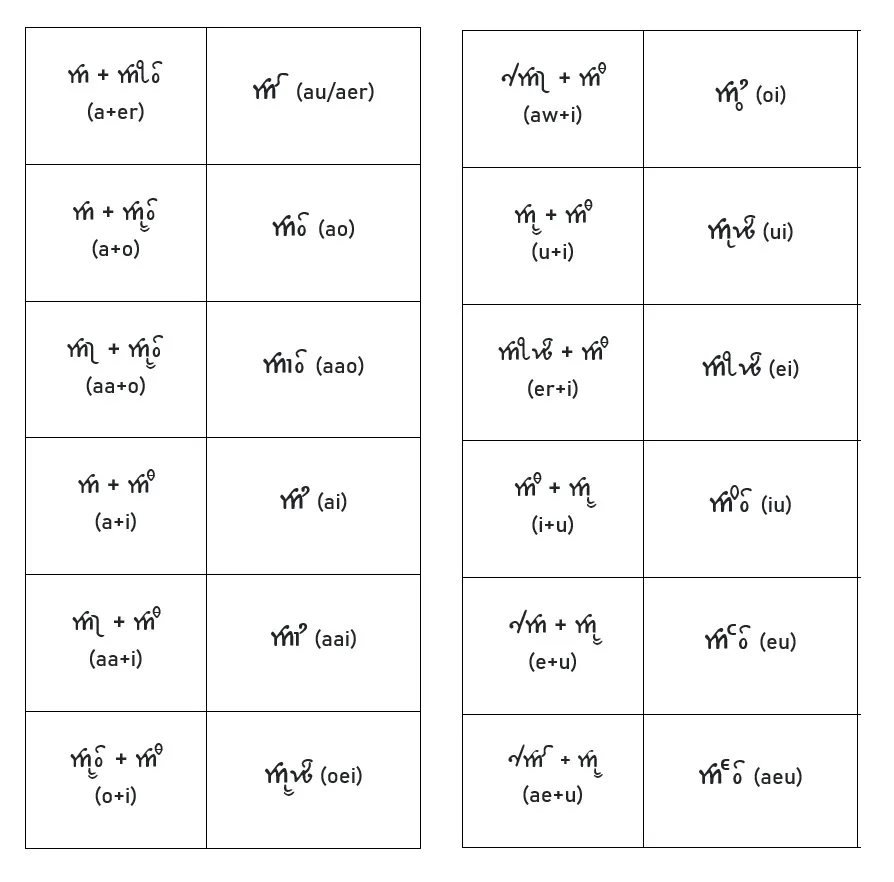
Aside from 11 pure vowels, we also have something called māe káp sâwn or dipthongs, that are formed by combining two vowels
(or placing them on top of one another as word sâwn means).
We have twelve of these diphthongs which we read with ‘𑜒’
| Diphthong | |
|---|---|
 |
A] (au) |
|
Aw (ao) |
|
A,w (aao) |
|
Aj (ai) |
|
A,j (aai) |
|
AuNq (ui) |
|
AUNq (oei) |
|
Aoj (oi) |
|
AENq (ei) |
|
Aiw (iu) |
|
ACw (eu) |
|
AVw (aeu) |
Special use of 𑜐 and 𑜈
I mentioned it in the last lecture, that 𑜐 'nya' and 𑜈 ''wa' works as a dipthong when in the final position. So 𑜀𑜈𑜫 is not kav or kab, but ⟨kao⟩ or /kaw/ and similarly 𑜀𑜈𑜫 is just ⟨kai⟩ or /kaj/ and not 'knya'. So 𑜀𑜩 𑜀𑜐𑜫 and 𑜀𑜩𑜨 𑜀𑜨𑜐𑜫 both are just synonymical pairs. You can write it either way
Signkiller and Shorthand
We learned about signkiller in last lesson but let's revise again. Now in all abugidas, every consonant has an inherent vowel. In Thai and Assamese it is [ɔ] while in Ahom and other Shan languages it is [a]. To kill this inherent vowel, we use a sign killer, so 𑜍𑜀 is pronounced as raka while 𑜍𑜀𑜫 is pronounced as rak.In Ahom manuscripts sometimes the sign-killer is not used perhaps for artistic reasons but they are absolutely compulsory in modern Dai Ahom for clear reading. Also the shorthand -𑜪 basically appends the -am phoneme to the consonant below it. It is just a shorthand of -𑜉𑜫 and not a vowel like some people mistakenly call it.
Exercise
1.
What does 𑜀𑜦𑜡 𑜀𑜥𑜐𑜫 read?
2.
How will you write 'Kaw Rak Mau' in Ahom script?
3.
What does 𑜒𑜥𑜐𑜫 𑜀𑜣 𑜀𑜩𑜨 𑜏𑜡 read?
You must be logged in to attempt this quiz. Login