← Back to Articles

Importance of Tones and Vowel Length

Tones don't just 'matter' in Ahom. They are the basic bread and butter of Dai Language

The Tone Markers aren't optional. They are quisessential to the very script itself
admin • 2026-02-24 • Language

Perhaps one of the biggest criticism of fraud organizations like Pathsaku Tai Academy, Moran Tai Research Institute and so-called Tai Sahitya Sabha is their failure to understand even basics of Dai language. Not just they changed the entire Dai grammar into Indo-Aryan style word-order (SVO) but they also convinced the government that tones are not important and their fraud courses in collab with Dibrugarh University are in anyways even relevant to Tai learners.

Convincing the public of the fraud that Medini Mohan and his likes have been doing for the past decade (and more) has always been a challenge as the followers of Pathsaku are nothing less than human zombies who instead of accepting their incompetence (that they can't even speak a single word of Tai), starts heated arguments with deliberate ad-hominem, and other forms of personal attacks.

The purpose of this article is only to convince the actual learner and not cater to anyone else

The Tonal System

Ahom lost tones, so where did you get the tones from? This question I get asked a lot from students of Pathsaku Fraud Academy. But for the sake of the argument, tones are not something constant in Tai-Kadai languages. The tones that Ahom people employed in the beginning of Serkapha era were completely different from the tones they employed in late 18th or early 19th century for example. You can refer to “Tonal Change in the Tai languages of Northeast India” (Morey 2005) to read more about this

The tones that Ahom people employed in the beginning of Serkapha era were, by argument, completely different from the tones they employed in late 18th or early 19th century ~ “Tonal Change in the Tai languages of Northeast India” (Morey 2005)

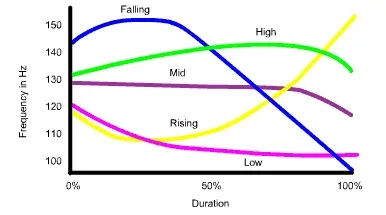
I never use the word 'Traditional Ahom' which as we know is extinct for 200 years. If you want to understand the difference between the Manuscript and Modern Revived Ahom, then you can refer to dis article But for Modern Dai Ahom we use Mongnai Shan Tones as illustrated in the chart below
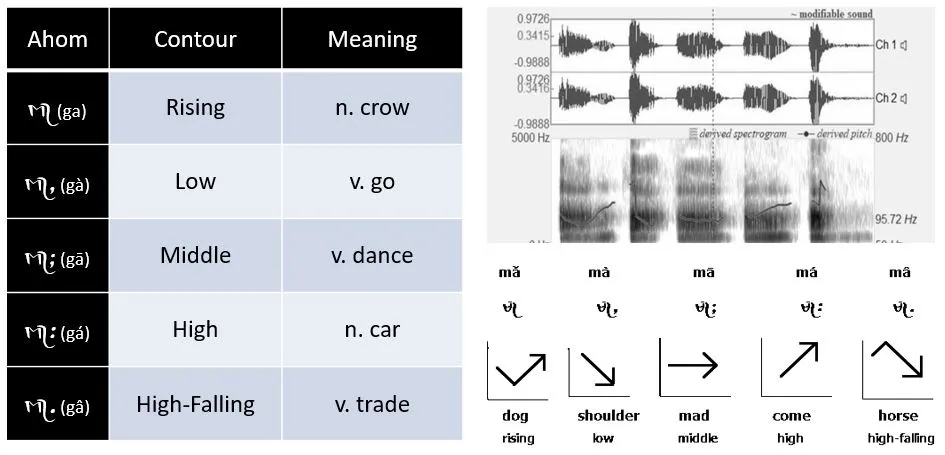
Ahom Tonal System
Dai Ahom has 5 tones - rising, low, mid, high and high-falling
Now there is the oversmart question of why not use our own tones, our own tonal markers etc. It's really stupid I believe. Imagine deciding contour for each and every word from scratch you will basically be creating your own artificial language like Game of Thrones. And even that won't take you anywhere (you are free to experiment) Language Revivalism is always about using a natural living language which has undergone several thousand years of evolution and spoken by people in their day-to-day life as reference to add what your dead language doesn't have, in this case tones and a huge vocabulary to make the language fit for modern use. So you essentially work backwards from Modern Shan to Old Ahom rather than Old Ahom to modern Shan which didn't get the frauds of Pathsaku anywhere and won't take you anywhere as well.

Now Ahom is just a curruption of the word Shan (Hsam) and Old Ahom was essentially just an old Shan dialect. Askng weird questions like is it Ahom language or Shan language is same as asking is your head empty or is it vacant? Ahom langauge is the variety of Shan language that is spoken by people of Assam, if that clears the definition.

Manuscript Ahom Analysis

Illustration of the Paik System
Why Old Ahom priests didn't invent tonal markers? Answer - Because they never needed them!
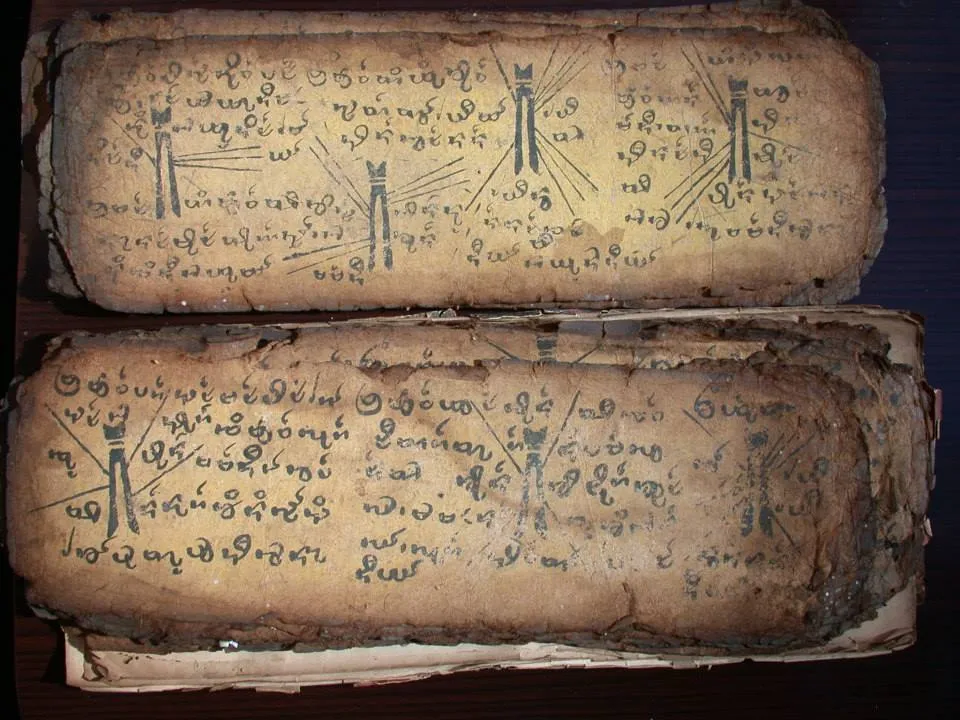
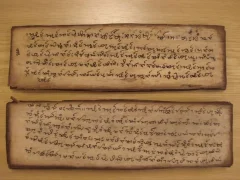
Today, so-called Ahom priests can't speak a single word of Tai but back in the day (several hundred years ago) when they already knew how to write manuscripts why did they also not record the tones? Answer is because they never felt the need to. They weren't writing these manuscripts for others to understand them. They were writing for themselves and the writer always knew what he was writing as did his son carefully taught by him. You may not understand the doctor's handwriting but the doctor himself can always tell what he wrote. Similarly the Ahom priests knew exactly where 𑜉𑜡 means a dog or horse, where 𑜍𑜥 means a head or ear, where 𑜉𑜣 means a wife or bear and so on but for the common reader there is absolutely no way to read and confirm what is the actual meaning

The need for tonal markers will only be there if you want everyone to understand what is written and you will be suprised to know how recent most Tai script reforms are. Shan added tone marks after 1958 script reform and Lao added them even later in 1975 under major Communist simplification to make the language more phonetic and more systematic. And the Khamtis added tone markings in their script as recent as 2003. Today most of these populations are almost 100% literate and can read and write their script very well. If you support illiteracy and ambuiguity then you will most probably belong in the so-called 'traditional' faction of 'no-tonal marks', but as is the purpose of this article I will show you how stupid that position is.

Can you really ignore Tones?

Talk is cheap. Let's dive straight away to some examples

Some examples of what happens when you ignore tones
Roman Ahom Meaning
Gài kj! n. chicken
Gái kj# n. penis (also xoi4 TODO)
Xài xj! n. egg
Xái xj# n. filth
Ga ka n. crow
ka# n. car (also lôt)
Ma ma n. dog
ma$ n. horse
Pa pa n. fish
pa@ n. aunt (respected term for aged women)
Phā fa@ n. cloth
Phâ fa$ n. sky
Ser sEw n. tiger
Sēr sEw@ n. shirt
Mi mI n. bear
mI# v. have
Yùm yumq! v. smile
Yûm yumq$ v. smile
Ma Dam ma dmq n. black dog (used for sacrifice in ancient tai rituals)
Mâ Dam ma$ dmq n. black horse

Don't forget vowel length!

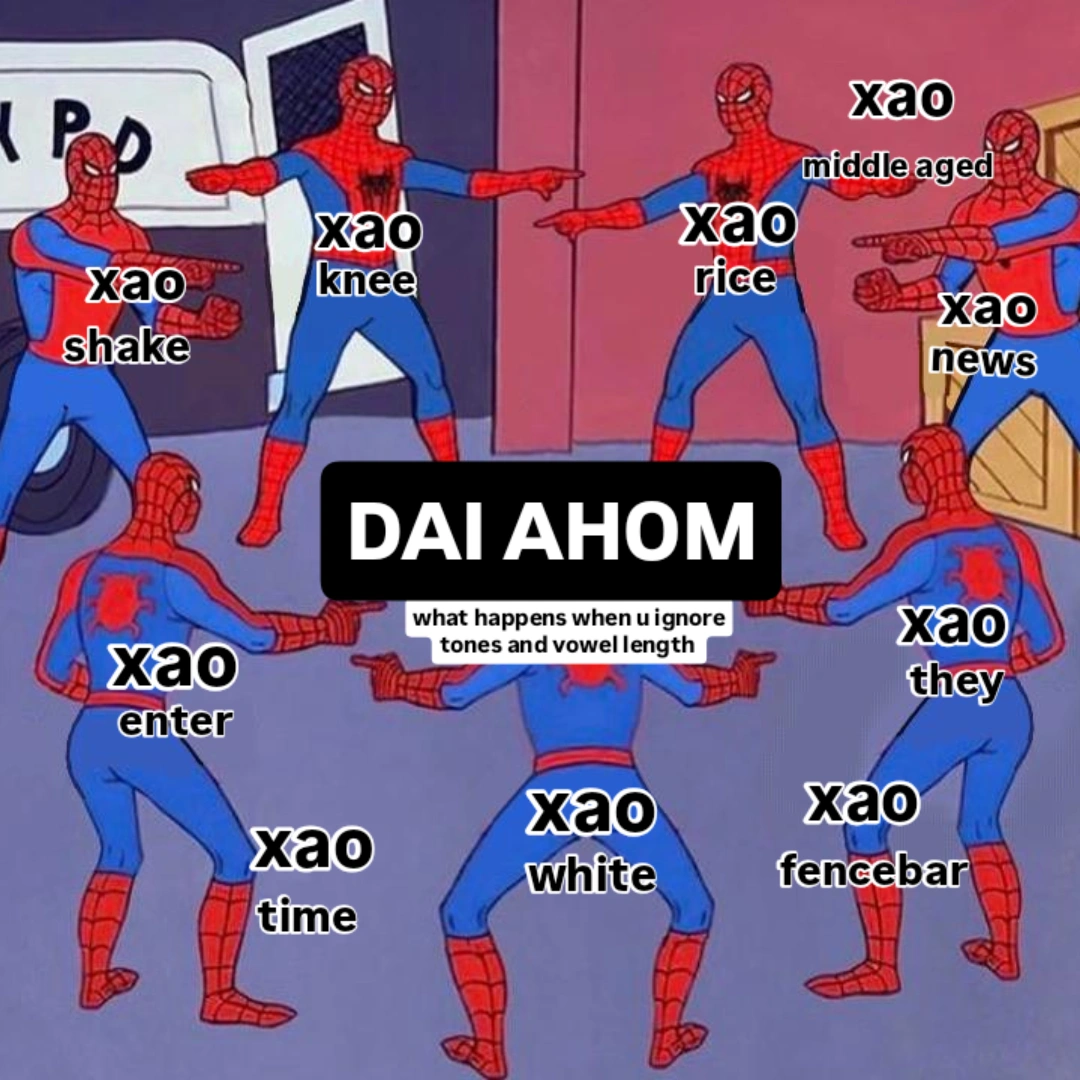
It's not just about tones but also the length of the vowel, particularly the medial /aa/ vowel and the combining dipthongs formed with it, as illustrated in this meme

Importance of Vowel Length
Roman Ahom Meaning
Xao xw n. horn; p. they/them; pluralizer
Xaao x,w adj. white, pale
Xào xw! n. knee
Xàao x,w! n. news
Xāo xw@ n. rice; v. enter, come in
Xāao x,w@ n. fence bar
Xáo xw# v. shake, vibrate
Xáao x,w# n. time, period
Xâao x,w$ adj. middle-aged
Ahom Tonal System
What happens when you ignore tones and vowel length

An important thing to note. Tai ears hear vowel length first and tone afterwards. So if your tone is wrong but vowel length is right it can still be understandable. But if your vowel length is wrong and tone is right it still sounds wrong and ununderstandable ! So give special importance to stressing the vowel length.

So you can clearly see the confusion if someone says wrong tone, for example kún tái they might still be understood (~Tai Person) but even if they say wrong tone but correct vowel length like kún táai then they will not be understood at all… Because these are inherently different vowels and Tai ears always listen vowel first tone later. Just to illustrate the same

Tones and Vowel Length
Roman Ahom Meaning
Kún Tái kunq# tj# n. tai person (also kón tái)
Kún Taai kunq# t,j n. dead person (also kón taai)
Yíng Xaao yi[q# x,w n. fair-skinned woman
Yíng Xâao yi[q# x,w$ n. middle-aged woman

There is no room for 'context', tones are as quisessential to Dai as they are to Chinese. The trick is to completely stop using ur Indo-Aryan brain and start thinking how Dai speakers actually think - in tones